Searching for the right bathroom lighting can feel overwhelming when faced with endless online options and vague product photos. Shopping locally offers a smarter alternative: homeowners can see fixtures in person, compare light color and quality side by side, and often get same-day installation advice from staff who understand local building codes. In 2026, local lighting stores and showrooms continue to offer advantages that online shopping can’t match, especially for spaces like bathrooms, where fixture placement, moisture ratings, and task lighting matter more than aesthetic alone. This guide walks through where to find quality bathroom lighting locally, what to look for, and how to get the best value without sacrificing safety or style.
Table of Contents
ToggleKey Takeaways
- Shopping for bathroom lighting near you allows you to evaluate fixtures in person, verify moisture ratings, and confirm code compliance before purchasing—advantages that online shopping cannot provide.
- Vanity lights require proper placement and 75-100 watts (incandescent equivalent) of illumination, with color temperatures between 2,700-3,000 Kelvin to flattering skin tones and avoid shadows.
- Ambient lighting should produce 70-80 lumens per square foot of bathroom space, with dedicated lighting showrooms, home improvement centers, and electrical supply houses offering different selection levels and price points.
- Before visiting a showroom, bring measurements, photos, and tile samples to confirm dimming compatibility, check moisture ratings and UL certifications, and understand specific installation requirements for your fixture type.
- Local retailers offer savings opportunities through floor models, seasonal promotions, bundle discounts, price matching, and utility rebates that can reduce total bathroom lighting costs by 10-25 percent.
Why Shopping Locally for Bathroom Lighting Makes Sense
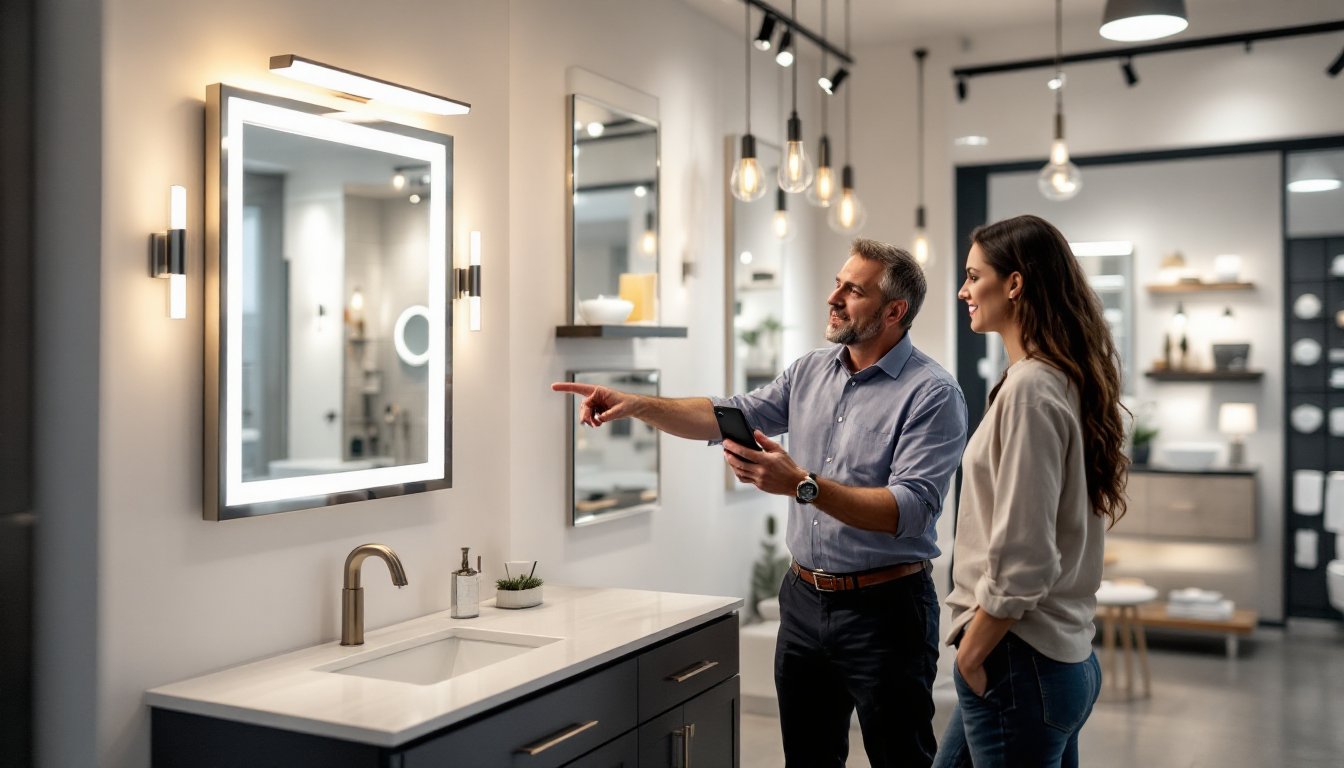
Local shopping lets homeowners evaluate fixtures under actual lighting conditions instead of relying on screen-rendered images. A vanity light that looks warm and flattering online might produce harsh shadows in real life. Showrooms display fixtures powered on, so shoppers can judge color temperature (measured in Kelvin), brightness, and beam spread before buying.
Local retailers also understand regional building codes. Bathrooms require fixtures with specific moisture ratings, typically UL-listed for damp or wet locations depending on proximity to showers and tubs. Staff at local stores can confirm whether a fixture meets National Electrical Code (NEC) requirements for the installation zone. That’s harder to verify with a product listing alone.
Returns and exchanges are simpler locally. If a fixture doesn’t fit the existing junction box or the light color clashes with tile finishes, most local stores handle returns without shipping fees or restocking charges. Some even offer installation referrals to licensed electricians familiar with local permitting processes.
Finally, local inventory means same-day or next-day availability. Online orders can take weeks, and backorders are common with popular styles. For a bathroom remodel on a tight timeline, having the fixture in hand immediately keeps the project moving.
Types of Bathroom Lighting Fixtures You’ll Find at Local Stores
Local showrooms typically stock the full range of bathroom lighting, organized by function and placement. Understanding the categories before visiting saves time and helps narrow choices.
Vanity and Mirror Lighting
Vanity lights mount above or beside mirrors and provide task lighting for grooming. The most common styles include:
- Bath bars: Horizontal fixtures with multiple bulbs, usually 18 to 48 inches long. They mount above mirrors and provide even, shadow-free illumination.
- Sconces: Wall-mounted fixtures installed on either side of a mirror at eye level (roughly 60 to 65 inches from the floor). Sconces eliminate shadows under the chin and around the eyes better than overhead-only lighting.
- Backlit or integrated LED mirrors: Mirrors with built-in LED strips around the perimeter. These provide diffused, even light and a modern look but require hardwired electrical connections.
For vanity lighting, proper placement and wattage prevent unflattering shadows during daily routines. Most designers recommend a combined 75 to 100 watts (incandescent equivalent) for a single-sink vanity, scaling up for double vanities. With LEDs, look for fixtures producing 1,500 to 3,000 lumens total.
Color temperature matters for vanity lights. Bulbs in the 2,700 to 3,000 Kelvin range produce warm white light that flatters skin tones. Cooler temperatures (above 4,000K) can make complexions look washed out.
Ambient and Overhead Fixtures
Ambient lighting provides general illumination for the entire bathroom. Common types include:
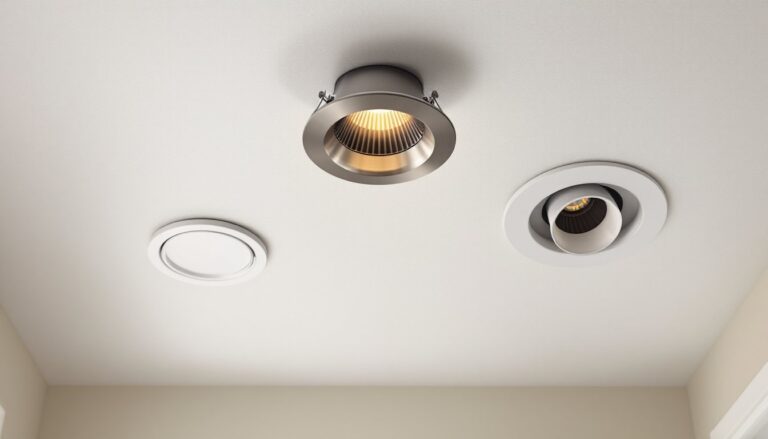
- Flush-mount and semi-flush ceiling fixtures: Low-profile fixtures that mount directly to the ceiling. Flush mounts sit flat against the ceiling: semi-flush models hang a few inches down. Both work well in bathrooms with standard 8-foot ceilings.
- Recessed canister lights: Also called can lights or downlights, these install into the ceiling for a clean, modern look. Use IC-rated (insulation contact) housings if insulation is present above the ceiling. For showers, specify wet-location-rated trim and housings.
- Chandeliers and pendants: Statement fixtures that hang from the ceiling. These add style but require adequate ceiling height (at least 8 feet, with the bottom of the fixture no lower than 7 feet above the floor to meet code in most jurisdictions).
Ambient fixtures should produce enough light for safe movement and general tasks. A rule of thumb: multiply the bathroom’s square footage by 70 to 80 lumens to get total ambient light needed. A 50-square-foot bathroom needs roughly 3,500 to 4,000 lumens from overhead sources.
Most local stores also carry exhaust fan/light combos, practical for small bathrooms where ceiling space is limited. These dual-function units meet ventilation requirements (typically 50 CFM minimum for bathrooms up to 100 square feet) while providing overhead lighting.
Where to Find Bathroom Lighting Stores Near You
Finding quality local lighting retailers takes a bit of research, but the options are broader than most homeowners realize.
Dedicated lighting showrooms offer the widest selection and most knowledgeable staff. These stores specialize in residential and commercial lighting, often carrying premium brands and hard-to-find styles. Staff can answer technical questions about wiring, dimming compatibility, and code compliance. Use search terms like “lighting showroom,” “lighting gallery,” or “light fixtures” plus the city name to find these stores.
Home improvement centers like Home Depot and Lowe’s stock a solid range of bathroom lighting at multiple price points. While selection is narrower than specialty showrooms, these stores offer convenience, consistent pricing, and easy returns. The lighting aisles are usually organized by room and fixture type, making it simple to compare options. Staff knowledge varies, so bring measurements and photos of the existing setup.
Local electrical supply houses sometimes have retail showrooms attached. These suppliers primarily serve electricians and contractors but welcome DIY customers. Inventory leans toward functional, code-compliant fixtures rather than decorative styles, but prices are often competitive. If unsure whether a fixture will work with a specific installation, the counter staff can usually advise, or connect customers with a contractor.
Architectural salvage and vintage lighting stores offer unique, period-appropriate fixtures for historic homes or homeowners seeking character pieces. These fixtures may need rewiring to meet current NEC standards, so factor in the cost of refurbishment. Many salvage shops also sell reproduction fixtures that mimic vintage styles with modern, UL-listed components.
Online search tools with local inventory filters help narrow options before leaving the house. Google Maps searches for “bathroom lighting near me” show nearby retailers with ratings, hours, and photos. Many stores also list inventory availability online, so homeowners can confirm stock before driving across town.
For those pursuing creative fixture placement or looking to understand broader design principles, visiting multiple store types provides a fuller picture of what’s available locally.
What to Look for When Visiting Local Lighting Showrooms
Walking into a showroom prepared saves time and ensures the fixtures brought home actually fit the space and meet code.
Bring measurements and photos. Know the dimensions of the vanity, mirror, and bathroom itself. Measure the height from floor to ceiling and the distance between existing junction boxes and the mirror or vanity top. Photos of the current setup, tile colors, and cabinet finishes help staff recommend fixtures that complement the existing design.
Check moisture ratings and certifications. Every bathroom fixture should carry a UL listing and a moisture rating. Fixtures within 3 feet horizontally and 8 feet vertically of a tub or shower need a wet location rating. Fixtures outside that zone but still in the bathroom should have a damp location rating at minimum. These ratings are usually printed on a label inside the fixture or listed in the product specs.
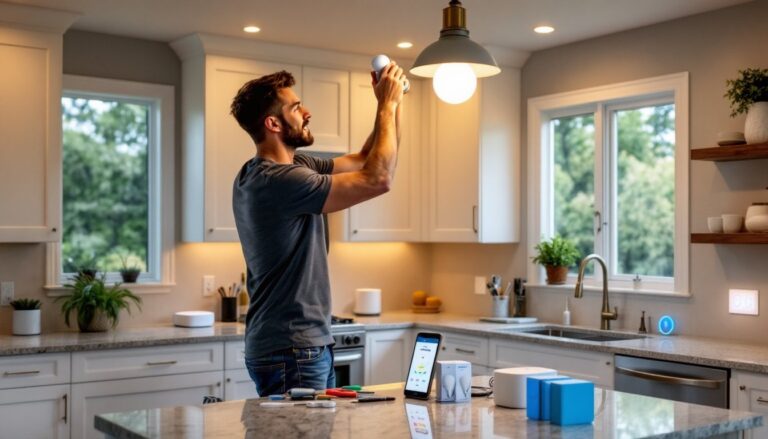
Ask about dimming compatibility. Not all LED fixtures dim smoothly. If planning to install a dimmer switch, confirm the fixture is dimmable and ask which dimmer models the manufacturer recommends. Incompatible dimmers cause flickering, buzzing, or shortened bulb life. Many showrooms keep compatibility charts on hand.
Evaluate light quality in person. Turn on display fixtures and stand at various distances. Check whether the light is harsh, whether it casts unwanted shadows, and whether the color temperature matches expectations. Bring a color swatch or tile sample if possible, lighting can make finishes look dramatically different.
Confirm bulb type and availability. Some fixtures use proprietary or hard-to-find bulbs. Ask whether replacement bulbs are stocked locally and what the expected lifespan is. Integrated LED fixtures (where the LED is built in and not replaceable) are common now: these typically last 25,000 to 50,000 hours but require replacing the entire fixture when the LED eventually fails.
Understand installation requirements. Ask whether the fixture works with a standard 4-inch round or octagonal junction box or if it requires a specific mounting bracket. If replacing an old fixture, confirm the new one will cover the existing hole and screw pattern. Some modern fixtures require a crossbar or strap that may not be included.
Safety note: Any electrical work in a bathroom must meet NEC Article 410 requirements. If unfamiliar with electrical codes or uncomfortable working around wiring, hire a licensed electrician. Some jurisdictions require permits for fixture replacement, particularly if adding new circuits or changing fixture locations.
Tips for Getting the Best Deals on Bathroom Lighting Locally
Local shopping doesn’t mean paying full price. Smart timing and negotiation can yield significant savings.
Shop floor models and open-box returns. Many showrooms sell display fixtures at a discount once a newer model arrives. These fixtures are often gently used, fully functional, and still carry manufacturer warranties. Ask the sales staff if any floor models are available for the styles being considered.
Look for seasonal sales and promotions. Lighting retailers often run sales around major holidays (Memorial Day, Labor Day, Black Friday) and during slower months like January and August. Signing up for email lists or following stores on social media alerts shoppers to upcoming promotions. Some stores also offer contractor discounts to DIYers purchasing multiple fixtures.
Bundle purchases for better pricing. Buying several fixtures at once, vanity lights, overhead fixture, and sconces, gives leverage for negotiating a package discount. Retailers prefer selling volume and may knock 10 to 20 percent off the total for multi-item purchases.
Ask about price matching. Some local retailers will match or beat online prices, especially for identical model numbers. Bring a printout or show the online listing on a phone. Factor in shipping costs and return policies when comparing: a local purchase that’s $20 more may still be the better deal if it includes free returns and immediate availability.
Check for rebates and energy incentives. Many utilities offer rebates for installing ENERGY STAR-certified LED fixtures. These rebates can range from $5 to $25 per fixture, depending on the program. Local stores sometimes have rebate forms at the register or can point customers to utility company websites. Combining a sale price with a rebate maximizes savings.
Consider purchasing online for local pickup. Some big-box stores offer online pricing that’s lower than in-store, with free same-day or next-day pickup. Ordering online and picking up locally captures the online discount while avoiding shipping delays.
For those just starting with fundamental principles of fixture selection or exploring current design directions, local retailers provide not just product but education, often included in the purchase price.
Wear PPE during installation. When installing new fixtures, wear safety glasses to protect against falling debris and sharp edges, especially when working overhead. Turn off power at the breaker, not just the switch, and verify it’s off with a non-contact voltage tester before touching any wires. If the existing fixture is heavy or awkwardly positioned, get a second pair of hands to hold it while disconnecting.
Local shopping for bathroom lighting in 2026 combines the tactile advantages of in-person evaluation with competitive pricing and expert guidance. Whether upgrading a powder room or overhauling a master bath, the right fixture, sourced locally and installed correctly, delivers years of reliable, flattering light.