Recessed lighting has evolved far beyond the basic can lights your parents installed in the 1990s. Today’s fixtures come in dozens of configurations, each designed for specific installations, ceiling types, and lighting needs. Whether you’re retrofitting an outdated kitchen or wiring new construction, understanding the different types of recessed lighting will save you time, money, and the frustration of buying the wrong fixtures. This guide breaks down housing types, trim styles, and bulb options so you can pick the right combination for your project.
Table of Contents
ToggleKey Takeaways
- Choose new construction housings when framing is exposed and remodel housings for closed ceilings, as installing the wrong type creates code violations and fire hazards.
- IC-rated recessed lighting fixtures must be used wherever insulation is present to ensure fire safety and energy efficiency without costly thermal gaps.
- Select trim styles based on your needs: baffle trim reduces glare for living areas, reflector trim maximizes brightness for task lighting, and gimbal trim enables directional accent lighting.
- LED is the standard bulb choice for recessed lights in 2026; select BR30 bulbs for general lighting in 4-inch cans and BR40 for 5-6 inch cans with color temperature matched to room function.
- Airtight or AT-rated recessed lighting housings reduce air leakage and heat loss, making them essential in cold climates despite higher upfront costs of $18–$35 per fixture.
- Integrated LED canless housings offer a compact, single-unit solution with 50,000-hour lifespan, ideal for shallow ceiling cavities, though verify that drivers are accessible for future replacement.
What Is Recessed Lighting and Why It Matters
Recessed lighting, often called can lights, downlights, or pot lights, consists of fixtures installed into the ceiling so the housing sits above the ceiling line and only the trim and bulb are visible from below. Unlike pendant or flush-mount fixtures, recessed lights sit flush with or slightly recessed into the ceiling plane, creating clean lines and directing light downward.
The housing is the metal canister that gets installed in the ceiling cavity. It holds the electrical components, socket, and insulation barriers. The trim is the visible ring or baffle that covers the housing opening and controls how light disperses. The bulb or integrated LED module provides the actual illumination.
Choosing the right type matters because installing the wrong housing can create code violations, fire hazards, or insulation gaps that bleed heat and drive up energy bills. A remodel housing won’t work in new construction, and a non-IC-rated fixture can’t touch insulation without creating a fire risk. Getting it right the first time means you won’t be cutting open your ceiling twice.
Recessed Lighting by Housing Type
New Construction vs. Remodel Housing
New construction housings are designed for install before drywall goes up. They mount directly to ceiling joists with adjustable brackets, and the electrician runs wire through open framing. These housings cost less and install faster when you have access to the framing, typically $8–$15 per fixture before bulbs or trim.
If your ceiling is already closed up, you’ll need remodel housings (also called retrofit or old-work cans). These use spring-loaded clips or twist-lock bars that grip the drywall from below, eliminating the need to cut large access holes or attach to joists. Remodel cans cost slightly more, $12–$25 each, and take longer to install, but they’re your only option unless you’re tearing out the ceiling. Most remodel housings fit standard 4-inch, 5-inch, or 6-inch cutouts.
Canless or integrated LED housings have become popular in both new construction and remodel applications. Instead of a separate housing and bulb, the LED module, driver, and trim are a single unit that slides into a smaller ceiling cutout. These units are slim (often 1–2 inches deep), work in shallow ceiling cavities, and many are rated for direct insulation contact. Cost runs $15–$40 per fixture, but you skip the separate bulb purchase and get a 50,000-hour-rated light source. Check that the driver is accessible or replaceable, some canless units require full fixture replacement if the LED fails.
IC-Rated and Airtight Options
IC-rated (Insulation Contact) housings are designed to touch blown-in or batt insulation without overheating. Non-IC housings require a 3-inch clearance around the can, which creates thermal gaps and wasted energy. If your ceiling has insulation, and most do, use IC-rated fixtures. They cost $2–$5 more per can, but they’re worth it for fire safety and energy efficiency. The IC rating will be stamped on the housing or listed in the product specs.
Airtight or AT-rated housings include gaskets and sealed construction to prevent air leakage between conditioned space and the attic. According to building science principles discussed on sites like Fine Homebuilding, recessed lights are one of the biggest sources of air leakage in homes. Airtight housings reduce heat loss, prevent moisture migration, and can help meet energy codes in cold climates. Expect to pay $18–$35 per airtight can, but the payback in lower heating bills is real.
For wet or damp locations, covered patios, bathrooms, saunas, use wet-rated or damp-rated housings. Wet-rated fixtures are fully sealed and can handle direct water exposure. Damp-rated cans work in humid environments but not under direct spray. Both types use gaskets and corrosion-resistant materials. Don’t assume a standard IC-rated housing is moisture-safe: check the label.
Recessed Lighting by Trim Style
Trim controls the look and light output of your recessed fixture. Most housings accept interchangeable trims, so you can swap styles without replacing the can.
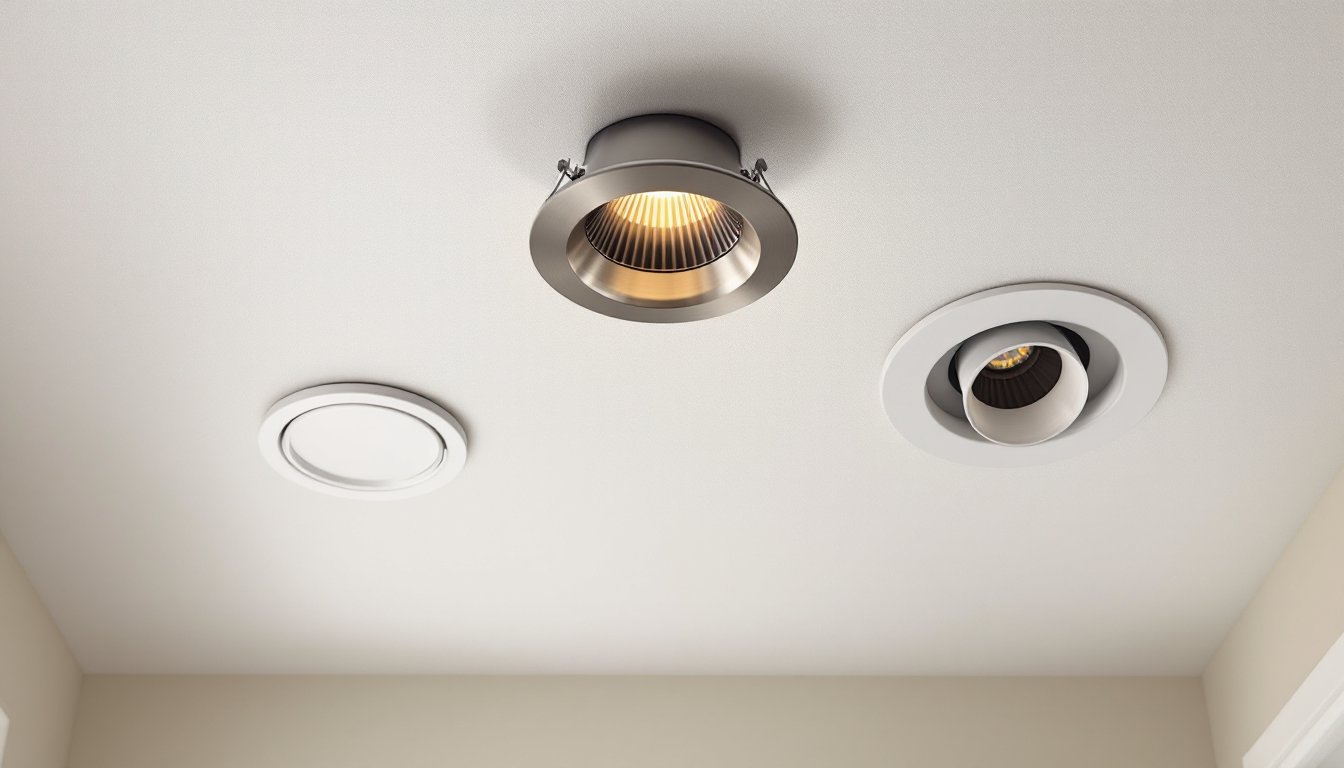
Baffle trim features a ribbed interior cone that reduces glare and softens light. It’s the most common trim for living rooms, bedrooms, and hallways. The black or white baffles absorb stray light and create a clean, low-profile look.
Reflector trim has a smooth, mirrored interior that bounces more light into the room. It’s brighter than baffle trim and works well for task lighting in kitchens, garages, or workspaces. Reflector trims can look harsh in bedrooms or dining areas unless paired with a dimmer.
Gimbal or eyeball trim includes a pivoting inner ring that lets you aim the light at walls, artwork, or countertops. Adjustable trims are ideal for accent lighting or highlighting architectural features. The range of motion varies, some pivot 30 degrees, others up to 50 degrees.
Shower trim (wet-rated) includes a sealed glass or acrylic lens and a gasketed housing connection. Use these in shower stalls, steam rooms, or exterior soffits. Don’t use standard open trims in wet locations, even if the housing is IC-rated, moisture will corrode the socket and ballast.
Pinhole and slot aperture trims create focused beams of light, often used in museums or galleries. These are specialty trims and cost more, but they’re worth considering if you want dramatic downlighting without visible fixtures.
Trims typically cost $5–$20 for standard baffle or reflector styles, and $15–$50 for wet-rated or adjustable gimbal trims.
Choosing the Right Bulb Type for Your Recessed Lights
If you’re using a traditional can with a replaceable bulb, you’ll choose between LED, CFL, or incandescent. Skip incandescent unless you enjoy replacing bulbs and paying high electric bills. CFLs are nearly obsolete. LED is the default for recessed lighting in 2026.
BR (Bulged Reflector) and PAR (Parabolic Aluminized Reflector) bulbs are the two main LED types for recessed cans. BR bulbs have a wide flood beam (typically 100–120 degrees) and work well for general lighting. PAR bulbs have a narrower, more controlled beam (25–40 degrees for spot, 40–60 degrees for flood) and suit task or accent lighting. Both are available in standard bases (E26) and fit most housings.
Bulb diameter matters. A BR30 is 30/8ths of an inch in diameter (3.75 inches) and fits 4-inch cans. BR40 bulbs (5 inches) fit 5- and 6-inch cans. Match bulb size to the housing or you’ll have gaps or overhang.
Color temperature is measured in Kelvin. 2700K is warm white, similar to incandescent bulbs, and works in living rooms and bedrooms. 3000K is soft white, popular in kitchens and baths. 4000K is neutral white, good for garages and utility spaces. 5000K+ is daylight or cool white, used in workshops or commercial settings. Mixing color temperatures in the same room looks amateurish, stick to one Kelvin range per space.
Lumens measure brightness. For general lighting, aim for 600–800 lumens per fixture in an 8-foot ceiling. Task lighting over counters or desks may need 1000+ lumens. Dimmability varies by bulb, check the label. Not all LED bulbs dim smoothly, and some require specific dimmer switches rated for LED loads.
Integrated LED housings skip the bulb decision entirely, but you’re locked into the factory color temperature and output unless the unit allows field-adjustable settings (some newer models have selectable Kelvin switches). When planning your overall room-by-room approach, matching recessed lights to ambient and task needs prevents over- or under-lighting.
Most homeowners find that material and labor costs vary widely by region and fixture count, so get quotes before committing to a full-house retrofit.
Conclusion
Choosing the right recessed lighting comes down to matching housing type, trim style, and bulb specs to your installation and lighting goals. Use new construction cans when framing is exposed, remodel housings for closed ceilings, and IC-rated fixtures wherever insulation is present. Pick trims that control glare and direct light where you need it, and default to LED bulbs with the right color temperature and lumen output. For more guidance on planning effective lighting layouts, or to explore advanced techniques for remodeling projects, trusted resources like This Old House offer step-by-step tutorials. Take your time, measure twice, and you’ll end up with clean, efficient lighting that lasts decades.