Outdoor lighting does more than help visitors find the front door after dark. It adds security, extends usable hours for outdoor spaces, and can turn a forgettable facade into one that stands out on the block. Done right, exterior lighting increases property value and makes a home safer. Done wrong, it wastes electricity and creates glare that annoys neighbors. This guide covers practical outdoor lighting ideas for pathways, porches, gardens, walls, and living spaces, with real product options, installation considerations, and code-compliant solutions that homeowners can tackle or hand off to an electrician when needed.
Table of Contents
ToggleKey Takeaways
- House outdoor lighting ideas enhance security, increase curb appeal, and extend usable outdoor hours while improving property value with modern LED technology that reduces energy costs by 75–80%.
- Pathway lighting should be spaced 6 to 8 feet apart with low-voltage 12V systems, while front porch fixtures need at least 800–1,200 lumens to safely illuminate entry points without glare.
- Landscape and garden lighting techniques like uplighting, downlighting, and wash lighting create depth and drama, requiring GFCI protection and direct-burial cable buried at least 6 inches deep.
- Deck and patio lighting should be layered with ambient post cap lights, string lights, and dimmer-controlled fixtures to provide both functional task lighting and inviting atmosphere.
- All exterior fixtures must match their exposure level with appropriate IP ratings (IP65 for fully exposed areas, IP44 under eaves) and warm white color temperatures between 3000K–4000K for optimal aesthetic integration.
Why Outdoor Lighting Matters for Your Home
Security is the most obvious benefit. A well-lit property discourages break-ins and reduces trip hazards on steps and uneven pavement. Motion-sensor fixtures near doors and driveways add a layer of active deterrence without leaving lights on all night.
Curb appeal follows close behind. The right fixtures highlight architectural details, mature trees, or stonework that disappears after sunset. Real estate agents consistently note that homes with updated exterior lighting photograph better and sell faster.
Functionality matters for anyone who uses their yard after dark. Pathway lights guide guests safely from the driveway to the door. Deck and patio lighting extends dinner parties and weekend projects into evening hours. These aren’t luxuries, they’re practical upgrades that get used year-round.
Energy costs have dropped with the shift to LED technology. Modern fixtures draw 75–80% less power than incandescent bulbs and last 25,000–50,000 hours. That translates to years of use before replacement, even on dusk-to-dawn photocell timers.
Pathway and Walkway Lighting Ideas
Low-voltage path lights are the standard for driveways, sidewalks, and garden trails. They run on 12V systems, which are safer to install than 120V line-voltage fixtures and don’t require conduit in most jurisdictions. A typical starter kit includes a transformer, cable, and six to eight fixtures.
Spacing matters. Place lights 6 to 8 feet apart along straight paths, closer on curves or steps. Too far apart, and you get dark gaps. Too close, and it looks like a runway.
Bollard lights work well for wider walkways and modern architecture. These knee-high fixtures (usually 18–24 inches tall) cast a pool of downward light without glare. They’re more visible during the day than stake lights, so choose a finish that complements your siding or trim.
For a cleaner look, consider recessed step lights or in-ground well lights. Step lights mount flush into risers on stairs and require a shallow recess cut into the material, easier with wood or composite than poured concrete. In-ground well lights sit flush with pavement and need proper drainage: standing water will short the fixture. Both options need GFCI protection per NEC Article 210.8.
Solar path lights have improved, but they’re still hit-or-miss. They work in full-sun areas with no tree cover, but output drops in winter and cloudy climates. If you go solar, buy quality models with replaceable rechargeable batteries and expect to swap them every 2–3 years.
Front Porch and Entryway Lighting Solutions
The front door is the focal point after dark, so it needs adequate, glare-free light. A single overhead fixture should provide at least 60–100 watts equivalent (in LED terms, that’s around 800–1,200 lumens) for a standard 6-to-8-foot porch.
Lantern-style sconces are the default choice, available in finishes from oil-rubbed bronze to brushed nickel. Hang them at eye level (about 66–72 inches from the porch floor) and centered on the door or spaced evenly if using a pair. Oversized lanterns (16 inches tall or more) suit larger doors and two-story entries.
For modern or minimalist homes, flush-mount ceiling fixtures or semi-flush pendants keep the profile low and the light even. Look for frosted or opal glass diffusers to soften the LED point sources and avoid harsh shadows on faces, important for security cameras and welcoming guests.
Motion sensors save energy and add security. Install a fixture with a built-in sensor or retrofit an existing box with a sensor-equipped bulb. Adjust sensitivity and duration so it doesn’t trigger from passing cars or wandering pets. Many homes using smart outdoor fixtures integrate lighting with home automation systems for remote control and scheduling.
If the porch ceiling is wood or composite, confirm the junction box is rated for the fixture weight. Heavier lanterns (over 5 pounds) need a ceiling-rated box secured to a joist or blocking, not just drywall anchors.
Landscape and Garden Lighting Techniques
Landscape lighting uses several techniques to create depth and drama. Each has a specific purpose and fixture type.
Uplighting highlights trees, architectural columns, or textured walls. Position a bullet-style spotlight or well light at the base of the feature and aim upward. Use narrow beam angles (15–30 degrees) for tall, narrow targets like tree trunks: wider beams (40–60 degrees) for broad shrubs or stone facades. Avoid lighting the underside of leaves directly, it looks unnatural.
Downlighting mimics moonlight and works well for patios, seating areas, and pathways. Mount fixtures high in trees or on eaves and aim down through branches. This technique requires sturdy mounting (use stainless steel straps or brackets, not wire hangers) and weatherproof housings rated for wet locations.
Path and area lighting keeps garden beds visible without overpowering plantings. Small mushroom lights or pagoda fixtures cast pools of light at ground level. Space them irregularly for a natural feel, not in rigid rows.
Wash lighting floods a wall or fence with even illumination. Install linear LED fixtures or multiple small spotlights spaced evenly and aimed at a consistent distance. This works for privacy fences, retaining walls, or the side of a garage.
All landscape lighting should connect to a GFCI-protected circuit. Low-voltage systems are easier for DIYers to install, but use direct-burial cable rated for wet locations and bury it at least 6 inches deep (check local codes, some areas require 12 inches). Mark cable runs on a site map before mulching or planting over them.
Many homeowners explore creative lighting strategies to integrate landscape fixtures with overall design themes.
Outdoor Wall and Facade Lighting Options
Facade lighting showcases architectural details, columns, gables, stonework, or siding texture. It’s more about accent than function, but it dramatically improves curb appeal.
Wall-mounted uplights install low on the wall and aim upward to graze the surface. They work best on brick, stone, or textured stucco where shadows add depth. Smooth vinyl siding doesn’t have enough relief to make this technique worthwhile.
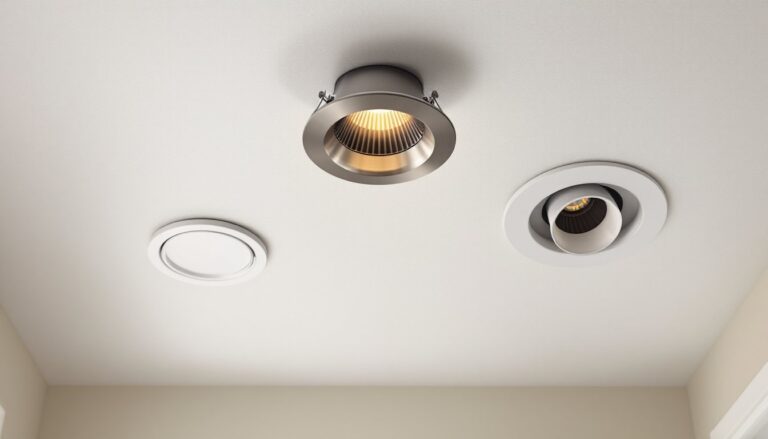
Recessed soffit lights mount in the overhang and shine down on the wall or entry. These require access to the soffit cavity and a bit of carpentry to cut holes and run cable. Use IC-rated housings if insulation is present. This is one area where hiring an electrician makes sense unless you’re comfortable working overhead and dealing with tight spaces.
Gooseneck barn lights suit farmhouse, industrial, or cottage styles. They mount directly to the wall and cast light downward in a wide cone. Most models use standard junction boxes and are straightforward to install, but get the proportions right, a 12-inch shade looks lost on a two-story wall: go 14–18 inches for better scale.
Color temperature matters for exterior walls. 3000K warm white complements earth tones, brick, and wood. 4000K neutral white works with white, gray, or modern materials. Anything cooler than 4000K starts to look clinical. Recent trends in exterior illumination favor warmer tones that integrate seamlessly with traditional and contemporary architecture.
Check the fixture’s IP rating (Ingress Protection). For fully exposed walls, look for IP65 or higher, which resists dust and high-pressure water jets. Under eaves, IP44 (splash-resistant) is usually sufficient.
Deck, Patio, and Outdoor Living Space Lighting
Outdoor living spaces get the most use after dark, so lighting needs to be functional, dimmable, and layered. A single overhead bulb won’t cut it.
Deck post cap lights are simple to install and add ambient light without glare. They sit on top of 4×4 posts and run on low-voltage or solar power. For a cleaner look, recessed deck lights mount flush in stair risers, post sides, or under railings. These require drilling and routing cable before final assembly, so they’re easiest on new builds or major remodels.
String lights (café lights) have become standard for patios and pergolas. Use commercial-grade strands with S14 or G40 bulbs on 12- or 14-gauge wire, not the flimsy party store stuff. String lights should be hung with tension cable or guy wire to prevent sagging. Attach to posts, pergola beams, or eye hooks screwed into fascia boards (hit a rafter, not just the fascia itself).
Ensure the circuit has GFCI protection. Exterior outlets within 6 feet of a wet location (pool, hot tub, fountain) require GFCI per NEC 210.8(A)(3). Use weatherproof in-use covers that seal even when a cord is plugged in.
Pendant lights over a dining table or bar area provide task lighting for cooking and eating. Hang them 30–36 inches above the table surface. Make sure the fixture is rated for wet or damp locations depending on coverage, fully exposed equals wet, under a solid roof equals damp.
Wall sconces on the house or privacy fence add fill light and reduce harsh shadows. Install them 66–72 inches off the deck surface and space them 8–10 feet apart for even coverage. For effective outdoor illumination strategies, many homeowners layer multiple fixture types to avoid flat, one-dimensional lighting.
Dimmer controls extend versatility. Use a dimmer rated for LED loads (standard incandescent dimmers can flicker or hum with LEDs). Smart dimmers let you adjust brightness from a phone and set schedules so lights turn on at sunset.
Fire pits and grills benefit from nearby step lights or bollards to keep the cooking area visible without flooding the whole patio. Gardens adjacent to patios often incorporate ambient landscape techniques to blend hardscape and softscape lighting seamlessly.
Conclusion
Good outdoor lighting balances safety, aesthetics, and energy efficiency. Start with the areas that get the most use, entryways, pathways, and living spaces, then layer in accent lighting for trees, walls, and architectural details. Low-voltage systems are DIY-friendly, but line-voltage work or anything involving structural changes to soffits or decks may require a licensed electrician and permits. Choose fixtures rated for the exposure level, use GFCI protection where required, and stick with LED technology for long-term savings.