The right lighting fixture can change a dining room from functional to unforgettable. It’s not just about seeing your plate, it’s about setting the mood, highlighting your table, and making the space feel finished. Modern dining room lighting has evolved beyond basic overhead fixtures into architectural statements, layered systems, and smart-controlled ambiance. Whether you’re renovating, building new, or just swapping out a dated chandelier, the options in 2026 lean toward clean lines, sculptural shapes, and flexibility. This guide walks through current fixture types, practical installation considerations, and lighting techniques that actually work.
Table of Contents
ToggleKey Takeaways
- Modern dining room lighting has evolved beyond basic overhead fixtures into layered, architectural systems that combine style with smart-home functionality and energy-efficient LED technology.
- Choose fixture size proportionally to your table—aim for a diameter that’s one-half to two-thirds the table width, and hang chandeliers or pendants 30–36 inches above the tabletop for optimal sight lines and ambiance.
- Modern dining room lighting works best when layered with ambient, task, and accent sources; install dimmers or smart controls to adjust brightness and color temperature throughout the day.
- Pendant lights and linear fixtures offer contemporary alternatives to chandeliers, with pendant clusters ideal for larger tables and linear fixtures purpose-built for rectangular dining tables.
- Always use an electrical box rated for your fixture’s weight, verify LED compatibility with any dimmer switch, and hire a licensed electrician for new wiring or junction box work to meet building codes and safety standards.
- Tunable white LEDs and smart home integration let you create custom lighting scenes that adapt to different occasions—from focused task lighting for game night to warm, dimmed ambiance for dinner parties.
Why Modern Lighting Matters in Your Dining Room
Modern lighting affects how a dining room feels and functions. Poor lighting makes food look unappetizing, casts unflattering shadows on faces, and turns dinner into a chore. Good lighting creates warmth, draws people in, and adapts to different uses, from weeknight meals to dinner parties.
Modern fixtures emphasize intentional design. They use materials like brushed brass, matte black steel, blown glass, and geometric frameworks that double as art. Unlike traditional chandeliers with ornate details, modern designs favor simplicity and impact through shape, scale, and finish.
The technical side matters too. Most modern fixtures accommodate LED bulbs, which reduce energy use by 75% compared to incandescent and last 25 times longer. LED compatibility also means better dimming performance and color temperature control, critical for a space where lighting needs shift throughout the day.
If the dining room doubles as a workspace or assignments station, modern fixtures with adjustable brightness and color temperature (measured in Kelvin, typically 2700K for warm white to 5000K for daylight) offer flexibility. Many new designs integrate seamlessly with smart home systems, which we’ll cover later.
Statement Chandeliers That Make an Impact
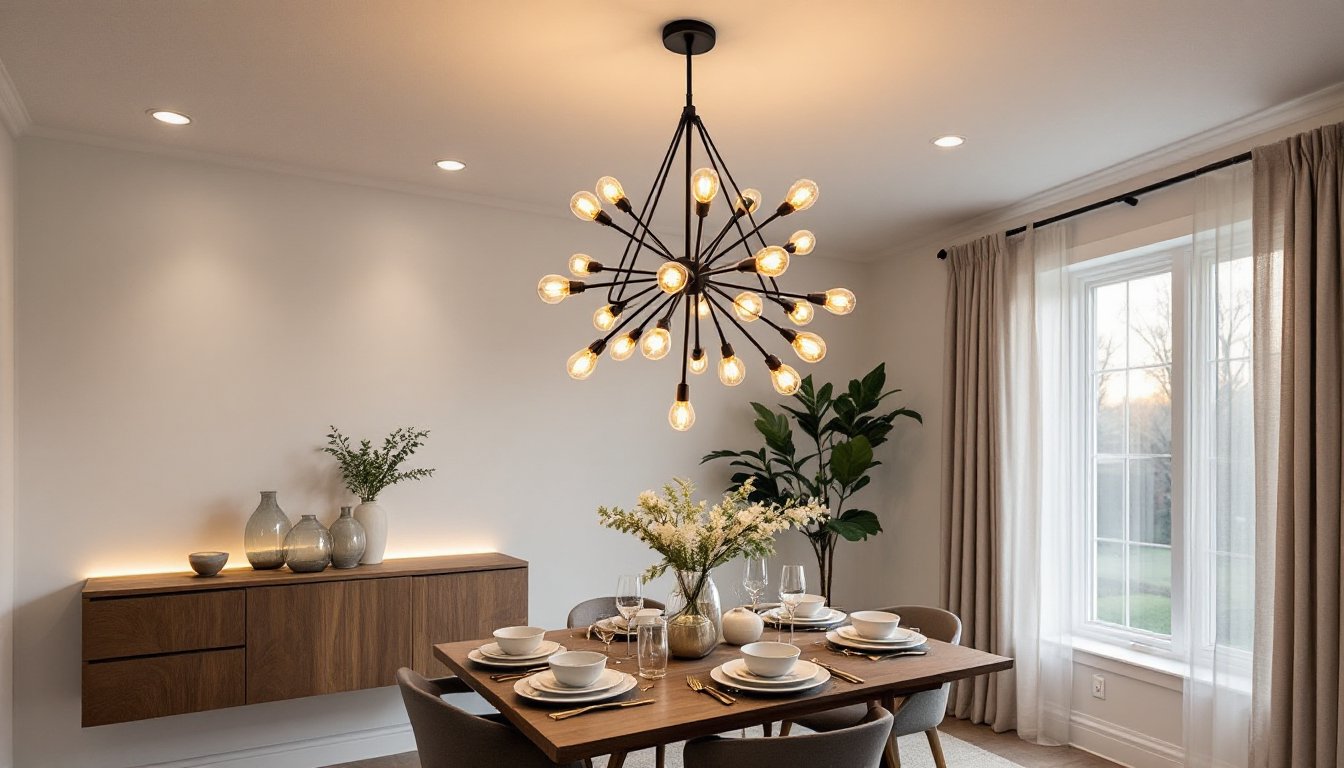
A statement chandelier anchors the room. It’s often the first thing people notice when they walk in. Modern chandeliers ditch the crystals and candelabra bulbs in favor of bold geometry, mixed materials, and sculptural presence.
Popular styles in 2026 include sputnik designs with radiating arms, tiered disc chandeliers in metal or acrylic, and globe clusters suspended at varying heights. Sizes matter: for a fixture centered over a dining table, aim for a diameter that’s one-half to two-thirds the width of the table. For example, a 60-inch table pairs well with a 30- to 40-inch chandelier.
Ceiling height drives installation. The bottom of the chandelier should hang 30 to 36 inches above the tabletop in rooms with standard 8-foot ceilings. In rooms with taller ceilings, you can go higher but maintain proportion, if it feels lost in space, it’s too small or too high. Use adjustable downrods or chain to dial in the right height.
Installation requires a solid electrical box rated for the fixture’s weight, usually 50 pounds or more for larger chandeliers. If the existing box is a lightweight pancake style, swap it for a heavy-duty fan-rated box anchored to a ceiling joist or blocking. This isn’t optional, undersized boxes can fail. If you’re uncomfortable working with live wiring or ceiling structure, hire a licensed electrician. Some jurisdictions require permits for new fixture installations, especially if you’re adding or moving a junction box.
For visual inspiration and real-world applications, statement chandeliers in modern dining rooms showcase how scale and style interact with furniture and architecture.
Pendant Lights for Contemporary Elegance
Pendant lights offer a cleaner, more minimal alternative to chandeliers. They work especially well in smaller dining rooms or over round tables where a single large fixture might overwhelm.
Modern pendants come in dome, cylinder, cone, and orb shapes, often finished in powder-coated metals, hand-blown glass, or natural materials like wood and rattan. Single large pendants (18 to 24 inches in diameter) suit round or square tables up to 48 inches. For larger tables, cluster two or three pendants of the same style, spaced evenly.
When installing multiples, maintain 24 to 30 inches of space between pendant centers and ensure they don’t block sightlines across the table. If you’re replacing a single-outlet ceiling box with multiple pendants, you’ll need a multi-port canopy or separate junction boxes, this usually means opening the ceiling and running new wire. Check local codes: some areas require this work to be done by a licensed electrician.
Pendant height follows the same 30- to 36-inch clearance rule as chandeliers. Adjustable cord or rod systems let you fine-tune on-site. Most pendants use E26 medium-base sockets compatible with standard LED bulbs. Choose bulbs with a CRI (Color Rendering Index) of 90 or higher for accurate color, important when you want food to look appetizing.
Pendants are ideal for renters or DIYers who want impact without permanent changes. Many modern designs use plug-in swag kits that hook to the ceiling and drape to an outlet, eliminating hardwiring entirely. Just make sure the canopy anchors to a stud or uses appropriate drywall anchors rated for the fixture’s weight.
Linear Suspension Fixtures for Long Tables
Linear suspension fixtures, also called island lights or elongated chandeliers, are purpose-built for rectangular dining tables. They distribute light evenly across the table length and create a strong visual line that emphasizes the room’s geometry.
These fixtures typically range from 36 to 60 inches long, though custom lengths are available for extra-long farm tables or conference-style dining setups. Match the fixture length to one-half to two-thirds the table length. A 72-inch table, for example, pairs well with a 36- to 48-inch linear fixture.
Common designs include multi-bulb tracks, caged frames with exposed Edison-style LEDs, and continuous LED strips in powder-coated or wood-clad housings. Many newer models use integrated LEDs rather than replaceable bulbs, which means slimmer profiles and better light distribution but also means replacing the entire fixture when the LEDs eventually fail (typically 25,000 to 50,000 hours).
Linear fixtures usually weigh more than single-point pendants due to their size and construction. Verify the electrical box is rated for the load. For particularly heavy fixtures (over 50 pounds), consider installing a metal ceiling fan brace between joists, these expand to fit standard 16- or 24-inch joist spacing and provide a rock-solid mount point.
These fixtures shine in open-concept spaces where the dining area flows into the kitchen or living room. The elongated shape visually separates zones without walls. When combined with proper layering techniques, linear fixtures create both task and ambient light.
Layered Lighting Techniques for Ambiance and Function
A single overhead fixture rarely delivers enough flexibility for a dining room. Layered lighting combines ambient, task, and accent sources to create depth and adaptability.
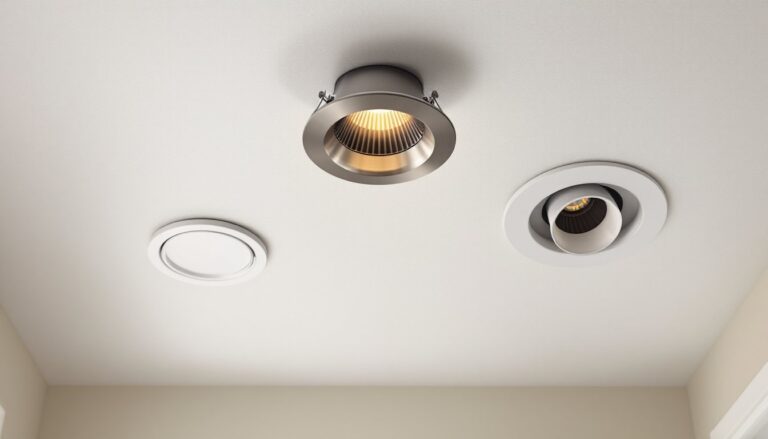
Ambient lighting sets the overall light level. In modern dining rooms, this often comes from recessed LED downlights or cove lighting hidden in crown molding or tray ceilings. Recessed lights should be IC-rated (insulation contact) if installed in insulated ceilings and airtight-rated in energy-efficient homes to prevent heat loss. Space them 4 to 6 feet apart in a grid pattern for even coverage. Use narrow flood beam angles (25 to 40 degrees) to avoid hot spots.
Task lighting focuses on the table itself, this is the job of your chandelier, pendant, or linear fixture. The key is adjustability. Install a dimmer switch (more on this next section) so you can dial brightness up for assignments or game night and down for dinner parties.
Accent lighting highlights architectural details, artwork, or a sideboard. Track lighting with adjustable heads, picture lights, or LED strip lighting under floating shelves add layers without clutter. In 2026, many accent fixtures use tunable white LEDs that shift from warm (2700K) to cool (5000K) to match the time of day or activity.
Layering takes planning. Map out light sources on paper or with a lighting design app before you start cutting holes in the ceiling. Identify which lights control from which switches, three-way or four-way switching may be needed if the dining room has multiple entry points. For rooms with complex layouts, consider a smart lighting system that controls multiple zones from a single interface.
Safety note: Any work involving new circuits, junction boxes, or changes to existing wiring should be inspected per the National Electrical Code (NEC) and local amendments. Many jurisdictions require permits and inspections for this work.
Smart Lighting Controls and Dimmers
Smart controls add convenience and precision. Dimmer switches are the baseline, they adjust brightness to match the occasion and extend bulb life. But not all dimmers work with all bulbs.
Older incandescent dimmers use a TRIAC (triode for alternating current) circuit that chops the AC waveform. They don’t play well with LEDs, causing flicker, buzzing, or a narrow dimming range. Modern LED-compatible dimmers use different circuitry and cost $15 to $40 depending on features. Brands like Lutron and Leviton make models specifically rated for LED and CFL loads. Check the dimmer’s minimum and maximum load ratings, undersizing or oversizing causes problems.
When installing a dimmer, turn off power at the breaker (not just the switch) and verify with a non-contact voltage tester. Remove the old switch, connect the dimmer’s leads to the line (hot) and load wires per the included diagram, then attach the ground. Some dimmers require a neutral wire, which may not be present in older switch boxes. If there’s no neutral, you’ll need to run new wire or use a smart dimmer that doesn’t require one (fewer options, usually pricier).
Smart dimmers and switches from companies like Lutron Caséta, Leviton Decora Smart, and TP-Link Kasa integrate with home automation platforms, Amazon Alexa, Google Home, Apple HomeKit, and others. They let you control lights from your phone, set schedules, and create scenes (e.g., “Dinner Party” dims the chandelier to 40%, turns on accent lights, and sets a warm color temperature).
Smart bulbs are another route. Bulbs like Philips Hue or LIFX have dimming and color control built in, no special switch needed. But there’s a catch: the wall switch must stay on for the bulbs to respond to app commands. If someone flips the switch off, the bulbs lose power and go offline. Some people solve this by installing smart switch covers that prevent accidental shutoffs.
For projects emphasizing flexibility and control, exploring current lighting trends reveals how automation and tunable LEDs are reshaping residential design. Pairing these controls with thoughtful fixture placement delivers a dining room that adapts as needs change. Additional guidance for choosing the best lighting for specific room types can help refine your approach.
Installation of smart devices usually doesn’t require a permit, but any new wiring or circuit work does. If you’re adding multiple zones or upgrading an old two-wire system to three-wire, consult an electrician.
Conclusion
Modern dining room lighting is about more than style, it’s about creating a space that adapts, performs, and feels intentional. Whether you choose a sculptural chandelier, a cluster of pendants, or a sleek linear fixture, the key is matching scale to the room, installing securely, and layering light sources for flexibility. Add smart controls and dimmers for fine-tuning, and you’ll have a dining room that works as hard as it looks good.