Getting dining room lighting right in a coastal home means balancing style with durability. The right fixture can transform a meal into an experience, soft, layered light that complements ocean views and weathered wood without fighting the salt air. Too many homeowners pick chandeliers based on looks alone, only to watch finishes corrode or bulbs burn out from humidity. This guide covers what actually works in coastal dining spaces: fixture types, materials that hold up near water, and the sizing rules that prevent a chandelier from looking like a lifeguard tower or a guppy in a shark tank.
Table of Contents
ToggleKey Takeaways
- Coastal dining room lighting must balance aesthetics with durability, using salt-resistant materials like stainless steel, marine-grade brass, and sealed wood to prevent corrosion and wear over 10–15 years.
- Proper coastal dining room lighting requires three layers—task lighting over the table, ambient mood lighting, and accent lighting—combined with dimmer switches and warm white bulbs (2700K–3000K) for the relaxed beachy vibe.
- Choose fixture sizes using the formula of room length plus width in feet (converted to inches), ensuring the chandelier or pendant hangs 30–36 inches above the table surface without overwhelming the space.
- Coastal-style fixtures should favor simplicity over ornate designs, with open frameworks, natural textures like rattan and driftwood, and clean lines that complement ocean views and weathered architectural details.
- Outdoor-rated or damp-rated fixtures with UL Wet or Damp ratings are essential if the dining room opens to decks or patios, while regular Dry-rated fixtures work in standard indoor coastal spaces with proper monthly maintenance.
- Investing in mid-range coastal chandeliers ($200–$800) or quality pendants ($100–$400) upfront is more cost-effective than replacing corroded fixtures every few years, especially in high-salt-exposure zones.
Why Lighting Matters in Coastal Dining Room Design
Coastal dining rooms rely on natural light during the day, big windows, glass doors, reflective surfaces. But after sunset, artificial lighting takes over. The wrong fixture creates glare on white-washed walls or casts harsh shadows that kill the relaxed vibe.
Proper lighting in a coastal dining room serves three functions: task lighting over the table for meals and assignments, ambient lighting to set mood, and accent lighting to highlight artwork or architectural details like shiplap or exposed beams. A single overhead fixture rarely handles all three, which is why dimmer switches and layered sources matter.
Salt air, high humidity, and UV exposure from large windows accelerate wear on fixtures. Brass tarnishes faster, wood swells and contracts, and cheaper finishes flake. Choosing lighting for a coastal dining room isn’t just aesthetic, it’s a maintenance decision. The right materials save time and money over the fixture’s lifespan, which should be 10 to 15 years for quality pieces.
Key Characteristics of Coastal-Style Light Fixtures
Coastal lighting pulls from nautical, cottage, and beachy aesthetics without tipping into theme-park territory. The best fixtures feel casual but refined, think rope-wrapped pendants, weathered wood chandeliers, and glass globes that mimic buoys or lanterns.
Color palettes lean toward whites, soft blues, natural wood tones, and weathered metals. Fixtures in coastal dining room design often incorporate organic textures, rattan, linen drum shades, driftwood, seagrass, or woven cane. These materials add warmth and contrast against the bright, airy backgrounds typical of coastal interiors.
Light quality matters more than fixture shape. Coastal dining rooms benefit from warm white bulbs (2700K to 3000K) that mimic late-afternoon sunlight. Cool or daylight bulbs (above 4000K) feel clinical and clash with the organic materials common in these spaces.
Avoid heavy wrought iron or ornate crystal chandeliers unless the home skews traditional. Coastal style favors simplicity: clean lines, open frameworks, and fixtures that don’t visually crowd a room. If the chandelier looks like it belongs in a castle, it’s wrong for a beach house.
Best Types of Lighting for Coastal Dining Rooms
Chandeliers and Pendant Lights
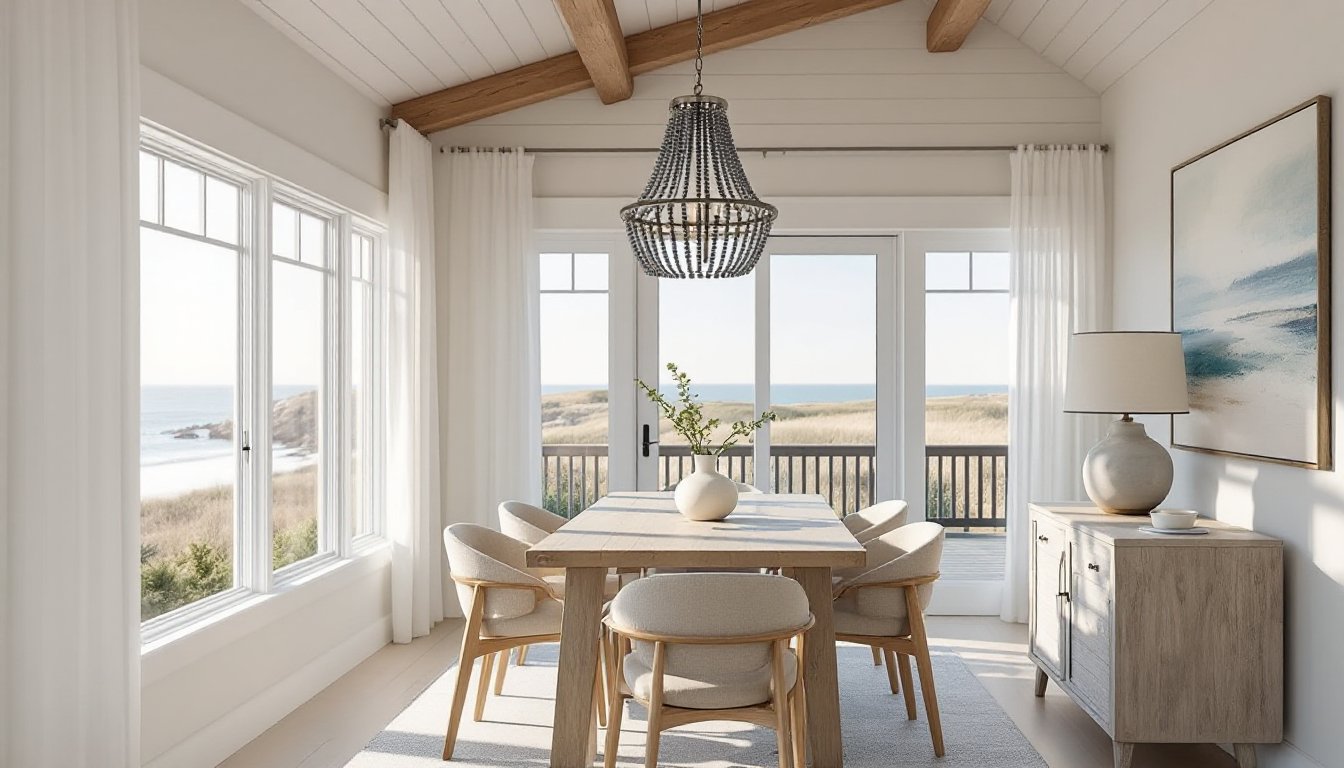
Chandeliers and pendants are the workhorses of dining room lighting. They provide focused task lighting over the table and serve as a visual anchor. For coastal spaces, consider beaded chandeliers (white or gray wood beads), capiz shell fixtures (translucent, light-diffusing), or open-cage designs in brushed nickel or oil-rubbed bronze.
Pendant clusters work well over long farmhouse tables. Three evenly spaced pendants in woven rattan or clear seeded glass create rhythm without blocking sightlines. Hang them 30 to 36 inches above the table surface, low enough to illuminate plates but high enough that a standing person doesn’t knock into them.
For an 8-foot ceiling, a pendant or chandelier shouldn’t hang lower than 27 to 30 inches from the ceiling to the bottom of the fixture. Taller ceilings allow for larger, more dramatic pieces. If the dining room has a vaulted ceiling, use an adjustable downrod to maintain proper height.
Wiring and installation: Most chandeliers require a ceiling box rated for the fixture’s weight. A typical beaded chandelier weighs 15 to 25 pounds: heavier driftwood or metal designs can hit 40 pounds or more. If replacing an old fixture, confirm the existing box can handle the load. If not, install a fan-rated or heavy-duty ceiling box secured to a joist or blocking. This isn’t a DIY shortcut, an undersized box can fail.
Flush and Semi-Flush Mount Options
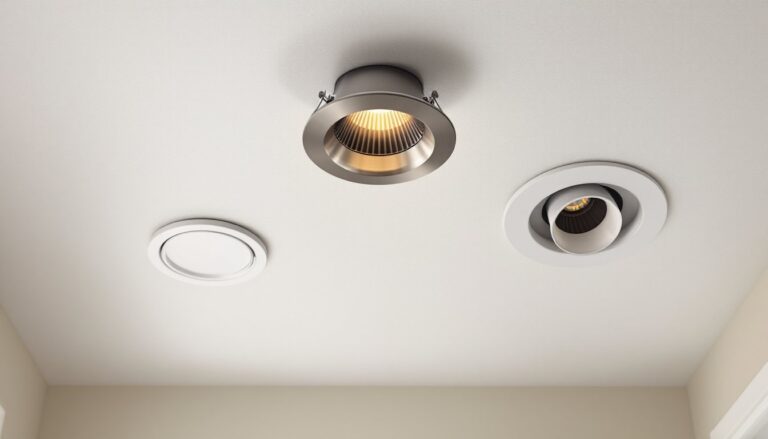
Rooms with low ceilings (under 8 feet) or architectural constraints (ceiling fans, ductwork) benefit from flush or semi-flush mounts. These fixtures sit close to the ceiling, freeing up vertical space without sacrificing style.
Flush mounts attach directly to the ceiling. Look for designs in frosted or seeded glass with brushed nickel or antique brass hardware. Drum-style flush mounts with linen or burlap shades add texture and diffuse light evenly.
Semi-flush mounts hang 4 to 8 inches below the ceiling on a short stem or chain. They provide slightly more presence than flush mounts and work well in cottages or bungalows where ceiling height is tight but the homeowner wants a hint of fixture personality.
Both types require careful bulb selection. Enclosed fixtures trap heat, shortening incandescent and halogen bulb life. Use LED bulbs rated for enclosed fixtures, they run cooler and last 15,000 to 25,000 hours. Check the fixture’s maximum wattage rating (usually stamped inside the canopy) and don’t exceed it.
Dimmer compatibility: Not all LEDs dim smoothly. Pair fixtures with a compatible dimmer switch designed for LED loads to avoid flickering or buzzing. Lutron and Leviton both make solid residential dimmers: expect to spend $20 to $40 per switch.
Choosing the Right Size and Placement
Fixture size makes or breaks a dining room. Too small, and it looks like an afterthought. Too large, and it overwhelms the space or creates a collision hazard.
Chandelier diameter formula: Add the room’s length and width in feet, then convert that sum to inches. For a 12-foot by 14-foot dining room, 12 + 14 = 26, so aim for a chandelier roughly 26 inches in diameter. This rule works for most rectangular and square rooms.
For rectangular tables, the chandelier or pendant cluster should be one-half to two-thirds the width of the table. A 40-inch-wide table pairs well with a fixture 20 to 27 inches wide. If using multiple pendants, space them evenly and keep the outer pendants 6 to 12 inches from the table edges.
Vertical clearance: Hang the bottom of the fixture 30 to 36 inches above the table surface. Measure from the table, not the floor, table heights vary. Standard dining tables sit at 28 to 30 inches tall, but counter-height or custom tables throw off the calculation.
If the dining room doubles as a workspace or craft room, consider adjustable-height fixtures or pulley-style pendants. These allow users to raise or lower the light source depending on the task.
Electrical box placement: Before buying a fixture, confirm the ceiling box is centered over the table. If it’s off-center, options include:
- Repositioning the table (easiest)
- Relocating the ceiling box (requires cutting drywall, running new wire, patching, and painting)
- Installing a swag hook and draping the cord to one side (works for lightweight pendants only)
Relocating a ceiling box typically costs $150 to $300 if an electrician does the work. Some jurisdictions require a permit for this type of alteration, especially if it involves modifying existing wiring or moving a box within a fire-rated ceiling.
Material and Finish Recommendations for Coastal Climates
Coastal environments are hard on light fixtures. Salt spray, humidity, and temperature swings corrode metals, warp wood, and degrade finishes. Choose materials engineered to withstand these conditions.
Metals: Stainless steel, powder-coated aluminum, and marine-grade brass hold up best. Standard brass and copper develop patina quickly, some homeowners love the look, others hate it. Oil-rubbed bronze resists fingerprints and hides minor corrosion. Avoid cheap plated finishes: the plating flakes off within a year or two near salt water.
Glass and shells: Clear, frosted, or seeded glass is durable and easy to clean. Capiz shell (a classic coastal material) is naturally moisture-resistant but fragile, handle carefully during installation. Rattan and woven materials should be sealed or treated for moisture resistance: unsealed natural fibers absorb humidity and can mildew.
Wood: If the fixture includes wood elements, confirm it’s sealed or finished for humid environments. Teak, cedar, and mahogany are naturally moisture-resistant. Pine and poplar are not, they’ll warp or split unless treated. Some manufacturers use reclaimed or driftwood-look finishes: ask whether the wood is solid or engineered and whether it’s been sealed.
Outdoor-rated fixtures for high-exposure areas: If the dining room opens directly onto a deck or patio (common in coastal homes), or if large sliding doors stay open frequently, consider outdoor-rated or damp-rated fixtures. These carry a UL Wet or Damp rating, meaning they’re built to handle moisture exposure. Standard indoor fixtures are rated Dry and will fail prematurely in high-humidity zones.
Check the fixture’s label or spec sheet for the UL rating. Dry-rated fixtures are fine for standard indoor dining rooms. Damp-rated fixtures work in covered outdoor areas or high-humidity indoor spaces (like a sunroom). Wet-rated fixtures tolerate direct water exposure (rain, sprinklers) and are overkill for most dining rooms unless the space is essentially outdoors.
Maintenance: Even durable finishes need care. Wipe down fixtures monthly with a dry microfiber cloth to remove salt residue and dust. For coastal spaces, avoid ammonia-based cleaners on metal, they accelerate tarnish. Use mild soap and water, then dry thoroughly.
Replacement parts: Before buying, confirm the manufacturer stocks replacement shades, globes, or hardware. Coastal fixtures take a beating, and being able to swap out a cracked glass shade beats replacing the entire chandelier. Some manufacturers offer lifetime warranties on structural components but not on finishes, read the fine print.
Finally, consider a proper lighting strategy that includes ambient sources like wall sconces or buffet lamps to reduce reliance on a single overhead fixture. This spreads wear and creates more flexible, layered light.
Budget expectations: Quality coastal chandeliers range from $200 to $800 for mid-grade fixtures and $1,000 to $3,000+ for designer or custom pieces. Pendants run $100 to $400 each. Flush mounts typically cost $80 to $300. Prices vary by material, size, and brand. Expect installation to add $100 to $250 if hiring an electrician, more if the job requires new wiring or box relocation.
If the home is in a true coastal climate, within a mile of salt water, invest in higher-grade materials from the start. Replacing a corroded fixture every three years costs more than buying the right one once.