Getting the lighting right in a dining room isn’t just about screwing in a fixture and calling it done. The wrong light can wash out faces, cast harsh shadows on food, or make the space feel cold and uninviting. A well-lit dining room, on the other hand, sets the tone for everything from weeknight dinners to holiday gatherings. Whether working with a formal dining room or a breakfast nook, the fixture type, placement, bulb choice, and layering strategy all play a role in how the space performs. This guide walks through the decisions that matter and skips the fluff.
Table of Contents
ToggleKey Takeaways
- Lighting dining room requires balancing fixture type, placement, bulb choice, and layering strategy to set the right ambiance and prevent harsh shadows or washed-out appearances.
- Chandeliers and pendant lights are popular dining room choices—chandeliers for formal spaces and pendants for casual areas—but sizing matters: aim for a fixture 26 inches in diameter in a 12×14 foot room, or one-half to two-thirds your table’s width.
- Hang your fixture 30 to 36 inches above the table surface to maintain clear sightlines while ensuring effective light distribution across the dining surface.
- Choose warm white LED bulbs (2700K–3000K) with a CRI of 90 or above to flatter skin tones and make food look appetizing while remaining energy-efficient.
- Layer your lighting with ambient (chandelier or recessed lights), task (table lamps or under-cabinet lights), and accent sources (sconces or picture lights) combined with dimmer switches for complete control and flexibility.
Why Dining Room Lighting Matters More Than You Think
Dining room lighting does more heavy lifting than most people realize. It affects color rendering, how food, faces, and finishes appear under the light. A fixture with poor color rendering index (CRI) can make a roast look gray and skin tones sallow.
Beyond appearance, lighting controls ambiance. A dimmer switch transforms the same fixture from bright task lighting during assignments hour to soft, warm light during dinner parties. Without that control, the room feels one-note.
Practical concerns matter too. Dining rooms often double as workspaces, game tables, or serving stations. A fixture that works for a candlelit dinner might not cut it when someone’s assembling a jigsaw puzzle or reviewing documents. Understanding how to light different scenarios in the same space is key.
Finally, the dining room fixture is usually front and center. It’s one of the first things people notice when they walk in. A poorly sized or positioned light throws off the entire room’s visual balance.
Types of Dining Room Lighting Fixtures to Consider
Chandeliers and Pendant Lights
Chandeliers remain the classic choice for dining rooms, especially in traditional or formal spaces. They provide a central focal point and distribute light evenly across the table. Multi-bulb chandeliers offer flexibility, installing them on a dimmer allows adjustment from full brightness to low ambient light.
Chandelier styles range from crystal and brass traditionalist designs to modern geometric frames. Size and scale matter more than style. A chandelier that’s too small disappears: one that’s too large dominates and can obstruct sightlines across the table.
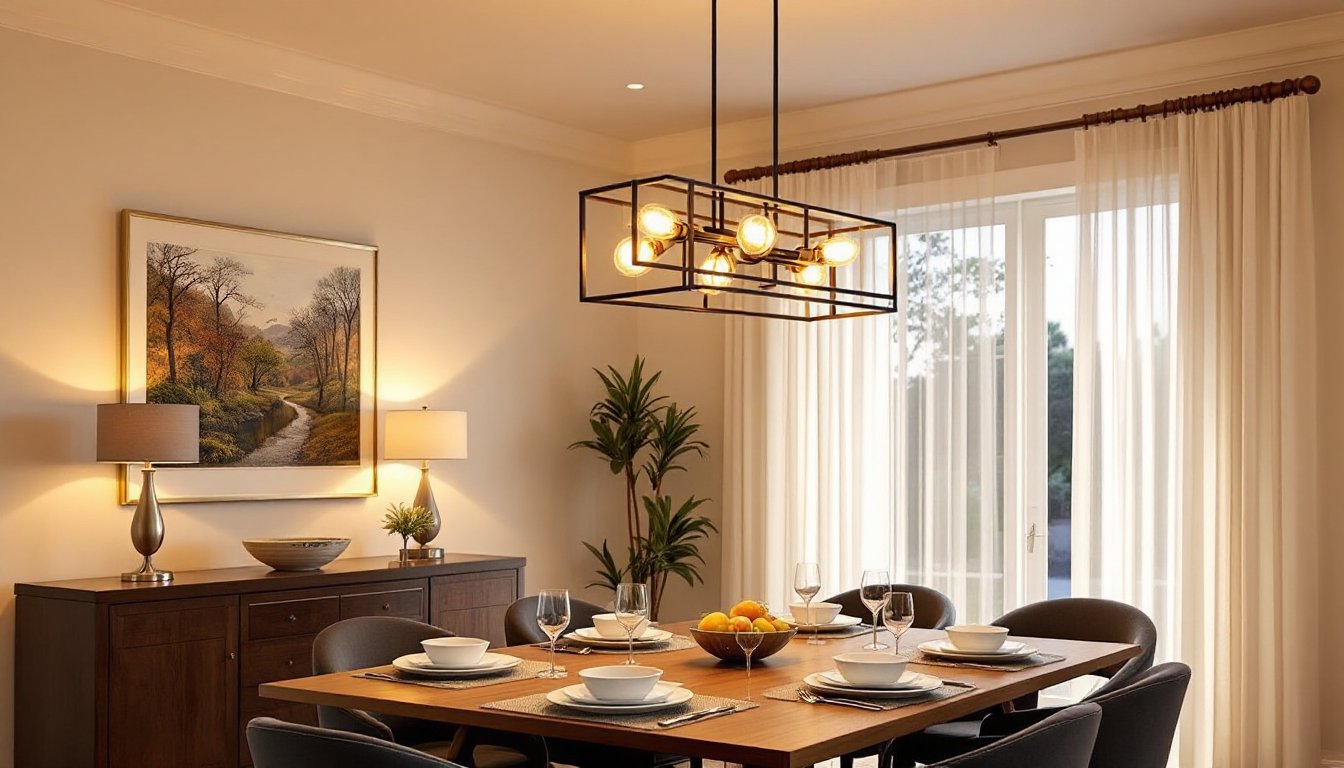
Pendant lights work well in casual dining areas, breakfast nooks, and contemporary spaces. Single large pendants suit round or small tables, while a row of two or three pendants works over rectangular tables. Glass, metal, or fabric shades each throw light differently, clear glass spreads light widely, while opaque shades direct it downward.
Pendants hang from adjustable rods or cords, making height customization easier than with fixed chandeliers. This adjustability helps dial in the right proportion and light distribution. Many designers are incorporating elements from current lighting trends like mixed materials and integrated LED modules.
Recessed and Track Lighting
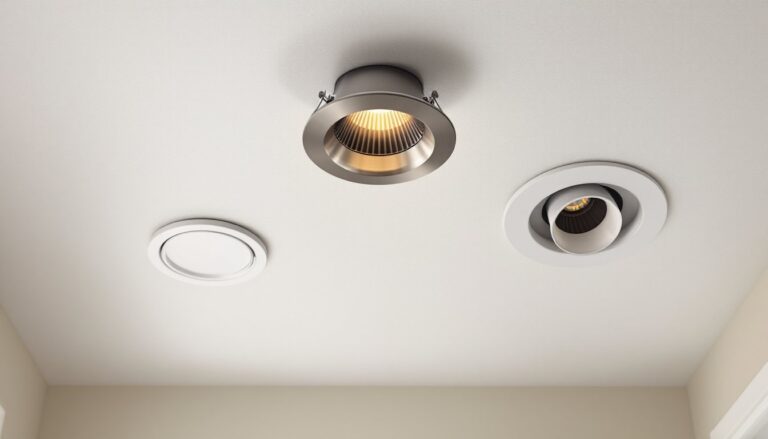
Recessed lighting (also called can lights) provides ambient illumination without a visible fixture. In dining rooms, recessed lights work best as supplemental lighting rather than the sole source. Positioning four to six recessed lights around the perimeter of the room creates a soft wash of light that complements a central chandelier or pendant.
Standard recessed cans use 6-inch housings for general lighting. Spacing them roughly 4 to 6 feet apart prevents dark spots. Angled trim or adjustable gimbal rings allow directing light toward walls or artwork, adding depth.
One caution: recessed lights alone can create a flat, commercial feel. They lack the visual interest and focal point that most dining rooms need. Always pair them with a statement fixture over the table.
Track lighting offers flexibility for oddly shaped dining areas or multipurpose rooms. Adjustable heads let homeowners direct light where it’s needed, over a buffet, onto a feature wall, or toward the table. Track systems come in single-circuit and multi-circuit versions: the latter allows controlling groups of lights independently.
Track lighting looks more at home in modern or industrial interiors. In traditional spaces, it can feel out of place unless carefully integrated. Finish choices, brushed nickel, matte black, bronze, should match other hardware in the room.
How to Size and Position Your Dining Room Light Fixture
Getting the size and height right prevents a fixture from looking like an afterthought or a collision hazard.
Sizing the fixture: A common rule of thumb is to add the room’s length and width (in feet), then convert that sum to inches for the fixture’s diameter. For example, a 12-foot by 14-foot dining room suggests a fixture around 26 inches in diameter. For rectangular tables, aim for a fixture that’s one-half to two-thirds the table’s width. A 72-inch table pairs well with a 36- to 48-inch fixture.
These are starting points, not absolutes. Ceiling height, table shape, and fixture style all influence what looks proportional. When in doubt, go slightly larger, undersized fixtures tend to look more awkward than slightly oversized ones.
Hanging height: The bottom of the fixture should sit 30 to 36 inches above the table surface. This range provides adequate clearance for sight lines while ensuring the light reaches the table effectively. For rooms with ceilings higher than 8 feet, add 3 inches of chain or rod for every additional foot of ceiling height.
If the dining table isn’t centered in the room (common in open-plan layouts), center the fixture over the table, not the room. The table is the functional anchor. Electrical boxes can be relocated if needed, though this requires opening the ceiling and possibly rerouting wiring, typically a job for an electrician unless the homeowner is comfortable working with 120-volt circuits and local electrical code.
For insight into general lighting principles that apply across rooms, the same proportional thinking holds.
Choosing the Right Light Bulbs and Color Temperature
Bulb choice affects everything from energy bills to how the room feels.
Bulb type: LED bulbs are the go-to for most dining room fixtures. They last 15,000 to 50,000 hours, use a fraction of the energy of incandescents, and generate far less heat. Dimmable LEDs are essential for dining rooms, but verify compatibility with the dimmer switch. Not all LEDs dim smoothly: some flicker or hum with incompatible dimmers.
For vintage or decorative fixtures, filament-style LED bulbs mimic the look of old Edison bulbs without the inefficiency. They add character to exposed-bulb chandeliers and industrial pendants.
Color temperature: Measured in Kelvin (K), color temperature determines whether light appears warm or cool. For dining rooms, 2700K to 3000K works best. This warm white range flatters skin tones and makes food look appetizing. Anything above 3500K starts to feel clinical and cold, fine for a garage, wrong for a dinner table.
Some manufacturers offer tunable white LEDs that adjust color temperature via a remote or app. This feature adds flexibility for homeowners who want cooler light during daytime tasks and warmer light in the evening.
Color Rendering Index (CRI): This measures how accurately a light source renders colors compared to natural daylight. A CRI of 90 or above is ideal for dining rooms. Lower CRI bulbs can distort colors, making reds look muddy and greens look grayish. Most quality LED bulbs list CRI on the packaging.
Wattage and lumens: Instead of thinking in watts (a measure of energy consumption), focus on lumens (actual light output). A dining room typically needs 3,000 to 6,000 lumens total, depending on size and ceiling height. A chandelier with five bulbs at 800 lumens each delivers 4,000 lumens, enough for most standard dining rooms. Adding a dimmer lets users dial that down for ambiance.
Layering Light for Function and Ambiance
Relying on a single overhead fixture leaves a dining room flat and one-dimensional. Layered lighting, combining ambient, task, and accent sources, creates depth and flexibility.
Ambient lighting provides overall illumination. In most dining rooms, the central chandelier or pendant serves this role. Recessed perimeter lights or a flush-mount ceiling fixture can supplement or replace a chandelier in rooms with low ceilings.
Task lighting isn’t always necessary in a dining room, but it helps when the space doubles as a workspace. A small table lamp on a sideboard or buffet adds localized light for serving or reading without overpowering the room. Under-cabinet lighting in a built-in hutch brightens glassware displays and adds subtle glow. For ideas on adapting light to different functions, lighting ideas for multipurpose rooms offer useful parallels.
Accent lighting highlights artwork, architectural details, or decorative elements. Picture lights, wall sconces, or adjustable recessed lights can draw attention to a feature wall or a painting. Sconces flanking a sideboard or buffet add symmetry and warmth, especially when fitted with warm-toned bulbs.
Dimmers are non-negotiable for layered lighting. Installing dimmers on each light source, chandelier, recessed lights, sconces, allows independent control. This flexibility lets homeowners shift from bright, evenly lit dinners to intimate, low-lit gatherings without swapping bulbs or fixtures. Homes exploring best lighting setups often find that dimmer switches deliver the most impact for the least cost.
Many dining rooms benefit from portable or seasonal accent pieces: a pair of candlesticks, a small LED strip behind a floating shelf, or even battery-powered picture lights. These additions don’t require electrical work but can elevate the room’s character. Several inspiring dining room lighting ideas showcase how designers mix fixed and flexible light sources for maximum adaptability.
For those interested in how professional designers approach fixture selection and layering, examples from sources like House Beautiful highlight the impact of intentional light placement and style coherence.
One often-overlooked element: natural light. If the dining room has windows, consider how daylight interacts with artificial sources. Sheer curtains diffuse harsh afternoon sun, while blackout shades give full control during evening meals. Daylighting reduces reliance on electric fixtures during morning and midday use, cutting energy costs and adding visual interest. Understanding the interplay between natural and artificial light sources helps balance the room throughout the day.
Finally, don’t ignore the ceiling itself. A painted or textured ceiling can reflect and diffuse light differently than flat white drywall. Dark colors absorb light, requiring more lumens to achieve the same brightness. Coffered or tray ceilings offer opportunities for cove lighting or recessed uplights that add drama without taking up visual space.