Tech Lighting has built a reputation for pendants that blend precision engineering with contemporary design. Their fixtures show up in high-end residential projects, boutique restaurants, and design-forward renovations where builder-grade just won’t cut it. These aren’t the brass-and-glass pendants your parents hung over their kitchen counter. Tech Lighting pendants lean modern, clean lines, quality materials, and thoughtful details that elevate a room without shouting for attention. Whether replacing outdated fixtures or designing new lighting layouts from scratch, understanding what sets these pendants apart helps homeowners make smarter decisions.
Table of Contents
ToggleKey Takeaways
- Tech lighting pendants distinguish themselves through hand-blown glass, machined aluminum, and modular MonoPoint/FreeJack systems that allow flexible spacing and track-compatible installation.
- Lumens matter more than watts for LED pendants—aim for 800–1,200 lumens for kitchen islands and 400–600 lumens for dining rooms, with 2700K–3000K color temperature for residential warmth.
- Proper sizing requires checking ceiling height, fixture diameter relative to room scale (roughly one-foot per 10 square feet), and 30–36 inches of clearance above kitchen countertops to prevent head bumps.
- Dimmer compatibility depends on your LED driver type (TRIAC, ELV, or 0-10V)—mismatched systems cause flickering, so verify Tech Lighting’s compatibility charts before purchase.
- Regular maintenance with microfiber cloth and vinegar-water solution keeps glass and metal finishes clean; inspect cable connections annually and expect integrated LED modules to last 50,000+ hours (roughly 15 years).
- Installation requires a proper ceiling box rated for pendant weight, a non-contact voltage tester for safety, and laser-level alignment for multiple pendants—hire a licensed electrician if uncomfortable with wiring.
What Makes Tech Lighting Pendants Stand Out
Tech Lighting pendants distinguish themselves through material quality and optical engineering. The brand uses hand-blown glass, machined aluminum, spun metal, and precision-molded acrylic, not the stamped steel and plastic found in big-box lighting.
Their glass shades, in particular, show careful craftsmanship. Many styles feature hand-blown borosilicate glass with uniform wall thickness, which diffuses light evenly and resists thermal shock better than standard soda-lime glass. This matters when running higher-wattage LED modules or dimming frequently.
Modular design is another hallmark. Most Tech Lighting pendants use a standardized low-voltage MonoPoint or FreeJack system, allowing fixtures to connect to track-mounted power feeds or single-point canopies. This makes spacing adjustable during installation, a huge advantage over hardwired pendants that lock you into fixed positions.
Optical performance gets serious attention. Tech Lighting designs many fixtures with specific beam spreads and color rendering in mind. Their current smart home integration trends show that modern fixtures increasingly pair with dimming systems and tunable white LEDs, and Tech Lighting has responded with driver compatibility across most lines.
Finish options go beyond the usual brushed nickel. Expect satin nickel, aged brass, antique bronze, and powdercoat black, all applied with multi-stage processes that resist fingerprints and corrosion better than single-coat alternatives.
Popular Tech Lighting Pendant Styles for Every Room
Kitchen Island Pendant Options
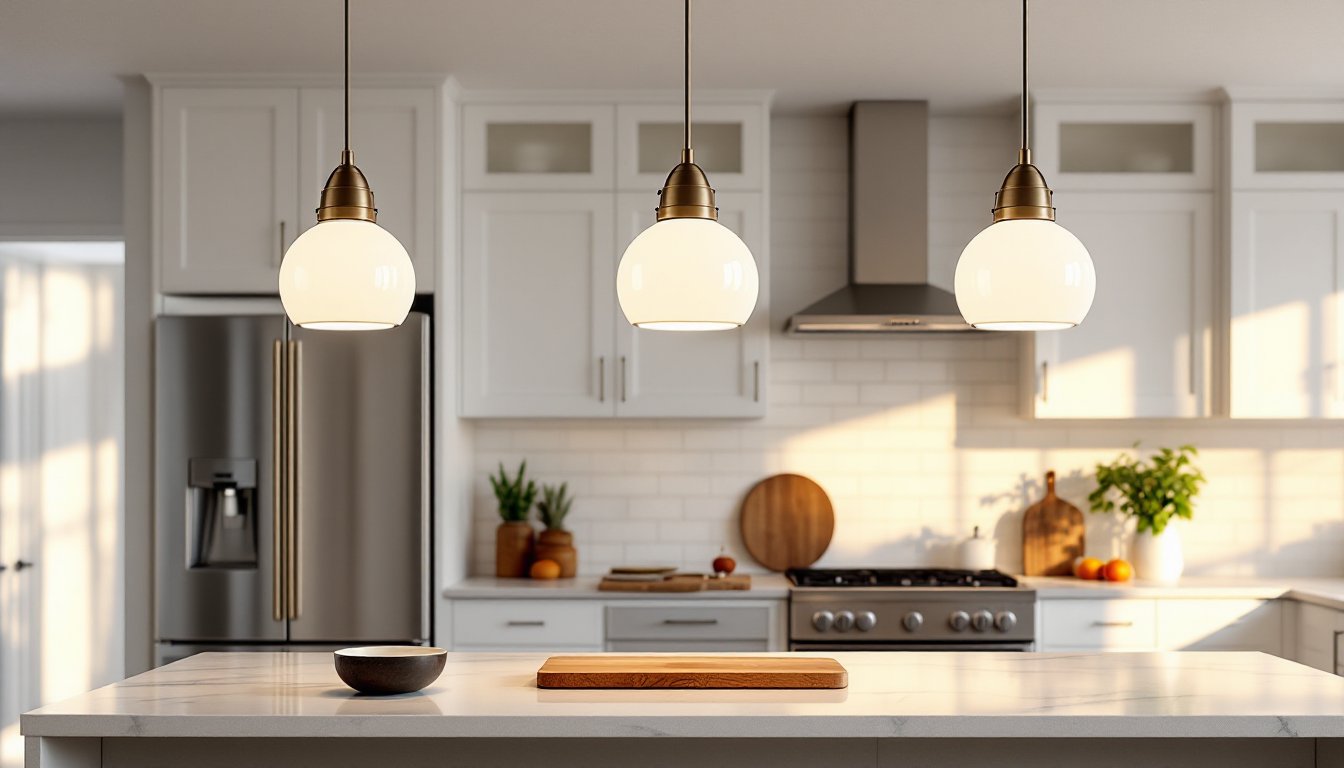
Linear suspensions dominate kitchen islands, and Tech Lighting offers multi-light bars that distribute task lighting across 6–8 feet of counter. Look for fixtures with adjustable pendant drops, island heights vary, and you’ll want the bottom of the shade 30 to 36 inches above the countertop to avoid head bumps while keeping light where you need it.
The Mini Pendants series works well in clusters of two or three. These compact fixtures (typically 4 to 6 inches in diameter) use single E26 medium-base sockets or integrated LED modules. For a 4-foot island, two pendants spaced 18 to 24 inches apart provide balanced illumination. On longer islands (7+ feet), three pendants work better.
Glass finishes matter for kitchens. Clear glass pendants create bright task lighting but can cause glare if you’re looking directly at the bulb. Opal or frosted diffusers soften the output and reduce hotspots, which is preferable for spaces where people gather. When planning effective lighting strategies, consider how different finishes affect both function and ambiance.
Statement Pieces for Dining Rooms and Entryways
Dining rooms call for larger-scale pendants or multi-tier chandeliers. Tech Lighting’s sculptural fixtures, think geometric cages, oversized globes, or clustered LED arrays, work as focal points above dining tables. Size appropriately: a fixture over a dining table should measure roughly one-half to two-thirds the table width.
For an 8-foot ceiling, allow 30 to 34 inches of clearance between the tabletop and the bottom of the fixture. Taller ceilings permit longer drops, but avoid going so low that the fixture blocks sightlines across the table.
Entryway pendants benefit from dramatic scale and vertical presence. A two-story foyer can handle fixtures with 36-inch or larger overall heights. When hanging in open stairwells, ensure the bottom of the fixture clears head height on any adjacent landing, usually 80 inches minimum above the finished floor.
Exploring contemporary lighting examples reveals how designers use oversized pendants to anchor open-plan spaces where traditional chandeliers feel too formal.
How to Choose the Right Tech Lighting Pendant for Your Space
Start with lumens, not watts. LED technology makes wattage irrelevant for brightness. A typical kitchen island task pendant should deliver 800 to 1,200 lumens per fixture. Dining room ambient fixtures can run lower, 400 to 600 lumens, since you’ll likely dim them for meals.
Color temperature shapes the mood. 2700K produces warm, incandescent-like light suitable for dining and living areas. 3000K strikes a neutral balance that works in kitchens and entryways. Avoid anything above 3500K in residential settings unless you’re lighting a workshop: cooler temps feel clinical.
Dimming compatibility isn’t automatic. Confirm that the fixture’s LED driver works with your dimmer type, TRIAC, ELV, or 0-10V. Mismatched dimmers cause flickering, buzzing, or limited dimming range. Tech Lighting publishes compatibility charts: check them before buying if you plan to dim.
Ceiling height dictates cable or rod length. Most Tech Lighting pendants ship with 72 to 120 inches of field-adjustable cable. For ceilings above 10 feet, order extension rods or additional cable. Measure twice: cutting cable is easy, but stretching it isn’t.
Scale and proportion prevent fixtures from looking lost or overwhelming. In a room with an 8-foot ceiling, pendants over 24 inches tall will dominate. In a space with 12-foot ceilings, anything under 18 inches disappears. A good rule: the fixture’s diameter or width should be roughly one-foot per 10 square feet of floor area for central ceiling mounts.
Consider existing electrical boxes. Some Tech Lighting pendants require MonoPoint or FreeJack adapters instead of standard round or octagonal boxes. If you’re retrofitting, verify that your junction box supports the fixture weight, most pendant-rated boxes handle 50 pounds, but heavier multi-light fixtures may need additional bracing.
Reviewing multiple lighting design approaches helps clarify how fixture style, placement, and quantity interact to shape a room’s character.
Installation Tips and Considerations
Safety first: Turn off power at the breaker, not just the wall switch. Use a non-contact voltage tester to confirm the circuit is dead before touching any wires. Pendant installation isn’t inherently dangerous, but working on a ladder with live wires is a bad combination.
Most pendant installs require basic hand tools: wire strippers, screwdrivers (flat and Phillips), needle-nose pliers, and a drill with bits for drywall anchors if you’re mounting to a pancake box. If the pendant weighs over 15 pounds, verify that the existing box is rated for ceiling fans or heavy fixtures. Retrofit-rated ceiling boxes like Arlington’s adjustable fan brace can be installed from below without attic access.
Mounting systems vary. Standard pendants use a round or octagonal junction box with a threaded nipple and crossbar. Tech Lighting’s track-compatible pendants use a quick-connect MonoPoint that snaps into a powered track head. If switching from hardwired to track-mounted, you’ll need to install a track section first, that’s a separate project involving new wiring runs.
When hanging multiple pendants, maintain even spacing. For three pendants over a 7-foot island, divide the length into four equal sections and hang fixtures at the first, second, and third dividers. Use a laser level or chalk line to ensure alignment, eyeballing leads to crooked rows.
Wire management keeps installs clean. Excess low-voltage cable can be coiled inside the canopy, but don’t kink or tightly bend it. Line-voltage pendants (120V) require wire nuts rated for the amperage, usually 15A household circuits, and secured connections with no exposed copper.
Adjusting cable length is straightforward: loosen the set screw on the canopy, pull cable to the desired drop, and retighten. Some fixtures use a spring-loaded grip instead: these require a slight twist while pulling.
If installing over a kitchen island or peninsula, check local codes. Some jurisdictions require GFCI protection for outlets within 6 feet of a sink, and that can extend to lighting circuits in wet-rated zones. When in doubt, consult an electrician, homeowner permits usually allow DIY lighting, but inspections still apply.
Many beginner-friendly lighting guides walk through the wiring basics, but if you’re uncomfortable with electrical work, hire a licensed electrician. Pendant installation labor typically runs $75 to $150 per fixture, depending on complexity and regional rates.
Maintaining and Caring for Your Tech Lighting Pendant
Glass shades attract dust and kitchen grease. Clean them every few months with a microfiber cloth and a 50/50 mix of water and white vinegar. For stubborn residue, use a drop of dish soap. Avoid ammonia-based cleaners on metal finishes, they can dull brushed nickel and aged brass over time.
Metal components benefit from periodic wipe-downs with a damp cloth. Satin and brushed finishes hide fingerprints better than polished metals, but they still accumulate grime in kitchens. Dry thoroughly after cleaning to prevent water spots.
LED modules in integrated fixtures aren’t user-replaceable in most Tech Lighting pendants. Expect 50,000+ hours of life, roughly 15 years at 8 hours daily. When an LED array finally dims or fails, contact Tech Lighting for module replacement options. Some models allow driver swaps without replacing the entire fixture.
For socket-based pendants using standard bulbs, replacing LEDs is simple. Match the original bulb’s base type (E26, E12), lumens, and color temperature. Mixing bulb temps across multiple pendants creates an uneven look.
Dimmer compatibility can degrade over time as drivers age. If a previously smooth dimmer starts flickering or dropping out at low levels, the issue is usually the driver, not the dimmer switch. Many Tech Lighting fixtures use replaceable drivers: check the product manual for part numbers.
Inspect cable and canopy connections annually. Pendant cables can loosen from vibration (especially in homes with heavy foot traffic above). A loose connection increases resistance, which can overheat wiring. Tighten set screws and verify wire nuts are snug.
If the fixture is above a steam-generating area (like a pot-filler faucet or range), moisture can cloud glass interiors. Most Tech Lighting pendants aren’t wet-rated, they’re designed for dry or damp locations per UL standards. Persistent condensation inside a shade indicates inadequate ventilation or incorrect application.
Staying current with emerging lighting trends helps homeowners anticipate when older fixtures might benefit from upgrades, especially as tunable white and smart controls become standard. Even well-maintained pendants eventually look dated, and Tech Lighting’s modular approach often allows component upgrades without full replacement.