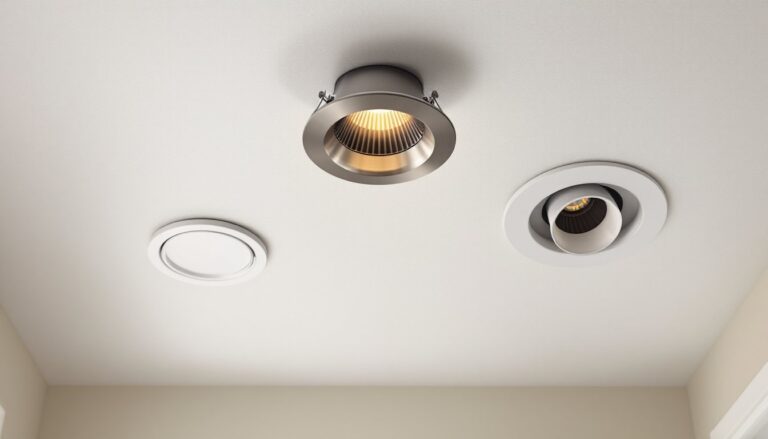
Good overhead lighting turns a kitchen from a shadowy cave into a functional workspace. It’s the foundation layer of any kitchen lighting plan, the one that keeps you from chopping garlic in your own shadow or squinting at a recipe card. Whether you’re remodeling or just tired of dim, dated fixtures, understanding the options and installation basics saves time, money, and frustration. This guide walks through fixture types, selection criteria, and installation tips to help homeowners tackle overhead kitchen lighting with confidence.
Table of Contents
ToggleKey Takeaways
- Overhead kitchen lighting is essential for safety and functionality, reducing the risk of knife slips, burns, and trips while improving food prep visibility.
- A 100-square-foot kitchen typically needs 3,000 to 5,000 lumens of overhead light to meet comfort and safety standards set by the Illuminating Engineering Society.
- Recessed lighting (can lights) and flush mount fixtures are the two most common overhead kitchen lighting options, each suited to different ceiling heights and design preferences.
- LED retrofit kits are more energy-efficient and longer-lasting than traditional incandescent bulbs, lasting 15 to 25 years and consuming a fraction of the energy.
- When choosing overhead kitchen lighting, prioritize lumen output over wattage, aim for a color rendering index of 90 or higher to accurately display food colors, and ensure fixtures are LED-compatible for optimal dimming performance.
- Most overhead kitchen lighting projects are DIY-friendly for existing fixture replacements, but recessed lighting installations with new circuits should be handled by licensed electricians to meet electrical codes and permit requirements.
Why Overhead Kitchen Lighting Matters
Kitchens demand more light than nearly any other room in the house. Overhead lighting provides the ambient illumination needed for safe food prep, cleanup, and navigation. Without adequate overhead coverage, task lighting alone creates harsh shadows and uneven visibility.
From a practical standpoint, good overhead lighting improves safety. A well-lit kitchen reduces the risk of knife slips, burns, and trips. It also makes it easier to spot spills, check food for doneness, and read labels.
Beyond function, overhead fixtures set the visual tone. A dated, yellowing flush mount can make an otherwise updated kitchen feel stuck in the 1990s. Modern LED fixtures, on the other hand, offer clean light, energy efficiency, and styles that complement contemporary and traditional designs alike.
Most building codes don’t mandate specific light levels for kitchens, but the Illuminating Engineering Society (IES) recommends 30 to 75 footcandles for general kitchen tasks. Translate that into practical terms: a 100-square-foot kitchen typically needs 3,000 to 5,000 lumens of overhead light to meet comfort and safety standards. That’s roughly three to five 60-watt-equivalent LED bulbs spread across the ceiling.
Types of Overhead Kitchen Lighting Fixtures
Choosing the right fixture type depends on ceiling height, style preferences, and how much light distribution you need. Here are the two most common categories for overhead kitchen lighting.
Recessed Lighting and Can Lights
Recessed lights (also called can lights or downlights) sit flush with the ceiling, making them ideal for kitchens with low ceilings or a minimalist aesthetic. They provide focused, directional light and work well in grids or rows to ensure even coverage.
Standard recessed housings come in 4-inch, 5-inch, and 6-inch diameters. For general overhead lighting in a kitchen, 5-inch or 6-inch cans are the go-to. Smaller 4-inch units work better as accent lights over counters or inside soffits.
Most new installs use IC-rated (insulation contact) housings, which can safely touch insulation in the ceiling cavity. If the ceiling is below an unconditioned attic, this rating is essential for fire safety and energy efficiency. Non-IC cans require a 3-inch clearance from insulation, complicating installation and creating thermal gaps.
LED retrofit kits have largely replaced traditional incandescent can lights. These kits include an integrated LED module and trim ring that screw into an existing Edison socket. They’re easier to install, last 15 to 25 years, and consume a fraction of the energy. Color temperature matters here: 3000K to 4000K (warm to neutral white) works best for kitchens, balancing clarity with warmth.
Spacing matters. For 8-foot ceilings, place cans 4 feet apart in a grid pattern. For higher ceilings, increase spacing slightly but avoid gaps larger than 5 feet or you’ll end up with dark zones. Many designers incorporate comprehensive lighting strategies that layer recessed fixtures with task and accent sources.
Flush Mount and Semi-Flush Mount Fixtures
Flush mount fixtures sit directly against the ceiling with no gap, while semi-flush mounts hang down 4 to 12 inches on a short stem or chain. Both styles work well in kitchens with standard ceiling heights and offer a wider range of decorative options than recessed lights.
Flush mounts are the workhorse of builder-grade kitchens. They’re affordable, simple to install, and available in sizes from 10 to 20 inches in diameter. For a typical 10×10-foot kitchen, a 14- to 16-inch fixture provides adequate coverage if paired with under-cabinet task lighting. Larger kitchens often need two flush mounts or a combination of flush and recessed fixtures.
Semi-flush mounts add a bit of visual interest without sacrificing headroom. They work especially well in kitchens with 9-foot or higher ceilings, where a flush mount can look undersized. Look for fixtures with frosted or opal glass diffusers to minimize glare and provide even light spread.
When selecting either type, check the maximum wattage rating and bulb compatibility. Many older fixtures were designed for incandescent bulbs and may not accommodate the heat dissipation needs of high-output LEDs. Modern fixtures often come with integrated LEDs, eliminating bulb compatibility concerns but requiring full fixture replacement when the LEDs eventually fail.
Some homeowners explore creative fixture placements to balance function and style, particularly in open-concept layouts where the kitchen flows into dining or living areas.
How to Choose the Right Overhead Lighting for Your Kitchen
Start with the layout and size of the space. Measure the room in feet, add those two numbers together, and convert to inches, that’s a rough guideline for the diameter of a single central fixture. A 12×14-foot kitchen would call for a fixture around 26 inches in diameter. If that feels too large or the room is oddly shaped, split the load with multiple smaller fixtures or a grid of recessed lights.
Consider ceiling height. 8-foot ceilings suit flush mounts and recessed lighting. 9- to 10-foot ceilings can handle semi-flush mounts or a mix of recessed and decorative fixtures. Anything above 10 feet opens the door to pendant lighting or chandeliers, though those typically supplement rather than replace overhead ambient light.
Lumen output is more important than wattage in the LED era. Aim for 50 to 75 lumens per square foot for general kitchen lighting. A 150-square-foot kitchen needs 7,500 to 11,250 lumens total. Divide that by the number of fixtures to figure out how bright each one should be. A grid of six recessed lights would need about 1,250 to 1,875 lumens each, easily achievable with modern LED retrofit kits.
Color rendering index (CRI) affects how food looks under your lights. A CRI of 90 or higher renders colors accurately, making produce look fresh and helping you judge when meat is properly seared. Cheaper LEDs with CRIs below 80 can make food look washed out or sickly.
Dimming capability adds flexibility. Not every task requires full brightness, and dimming can extend LED lifespan. Make sure both the fixture and the dimmer switch are rated for LED loads. Older incandescent dimmers often cause LEDs to flicker or hum. Look for dimmers labeled LED-compatible or ELV (electronic low voltage).
Energy efficiency is usually a given with LEDs, but it’s worth comparing lumens per watt. Quality fixtures deliver 80 to 100+ lumens per watt, while budget models may fall below 70. Over a fixture’s 20-year lifespan, that difference adds up to real money on the electric bill.
If style matters, think about how the fixture relates to other finishes in the room. Brushed nickel and matte black are current favorites and pair well with stainless steel appliances. Brass and bronze work in traditional or transitional kitchens. Glass shades should be easy to remove and clean, kitchens generate grease, and it will coat overhead fixtures over time. Many lighting principles apply across different room types, but kitchens demand extra attention to cleanability and lumen output.
Installation Tips for DIY Overhead Kitchen Lighting
Before touching any wires, turn off power at the breaker and verify it’s off with a non-contact voltage tester. Don’t rely on the wall switch alone, switches can be miswired.
Replacing an existing flush mount or semi-flush fixture is straightforward. Most mount to a round or octagonal electrical box with a crossbar and two screws. Remove the old fixture, disconnect the wires, attach the new fixture’s mounting bracket, connect wires (black to black, white to white, bare copper to green or bare ground), tuck everything into the box, and secure the fixture canopy.
If the existing box is plastic and the new fixture is heavy (over 10 pounds), upgrade to a metal ceiling box rated for fixture weight. Lightweight plastic boxes can crack or pull loose over time, especially in homes with ceiling vibration from second-floor foot traffic.
Recessed lighting installation is more involved. New construction is easiest, just nail or screw the housing to ceiling joists before drywall goes up. Retrofit installations require cutting holes in finished ceilings and fishing wire through the attic or ceiling cavity.
Use a stud finder to locate joists, then mark hole locations between joists. Most recessed housings need 6 to 8 inches of clearance above the ceiling. If there’s ductwork, plumbing, or low-clearance trusses, you may need shallow remodel housings designed for tight spaces.
Cut holes with a hole saw matching the housing’s trim diameter. Retrofit housings typically have spring clips or twist-lock tabs that secure them to the drywall without needing to attach to joists. Run 14/2 or 12/2 NM cable (depending on circuit breaker size, 15A or 20A) from the switch to each light, following local electrical code. Many jurisdictions allow daisy-chaining multiple recessed lights on one circuit, but check NEC Article 410 and local amendments.
If you’re installing more than three recessed lights or running new circuits, consider hiring a licensed electrician. Electrical work often requires a permit and inspection, especially if you’re adding new circuits or working in unfinished spaces. Homeowner-installed work is legal in most areas, but permit requirements vary.
Safety gear for overhead electrical work includes safety glasses, work gloves, and a sturdy step ladder or work platform. If you’re working in an attic, wear a dust mask and watch for exposed nails poking through the roof deck.
Installing dimmers is simple but requires attention to wiring. Most LED-compatible dimmers have two black wires and a green ground. Connect one black to the hot (usually black) wire from the breaker and the other to the fixture’s hot wire. The ground connects to the box’s ground wires. Some older homes lack ground wires, consider upgrading the circuit or installing a GFCI breaker for added protection.
After installation, test each fixture at full brightness and dimmed settings. LED flicker usually means an incompatible dimmer. Buzzing or humming can indicate a loose connection or a dimmer not rated for the fixture’s load. Resources like tested kitchen ceiling lights often review dimming performance alongside brightness and style.
For those new to electrical projects, beginner-friendly lighting tutorials and practical lighting tips can build confidence before tackling overhead installations.
Conclusion
Overhead kitchen lighting isn’t glamorous, but it’s foundational. Get it right and the rest of the lighting, pendants, under-cabinet strips, accent lights, falls into place. Whether installing recessed cans, swapping a flush mount, or planning a full kitchen remodel, focus on lumen output, even distribution, and quality fixtures that’ll last. With the right tools and a methodical approach, most overhead lighting projects are well within DIY reach.