Los Angeles homeowners are wiring their homes for the future. From Hancock Park bungalows to Silver Lake mid-century moderns, smart automation systems are becoming standard equipment, not luxury add-ons. The city’s tech-savvy residents want climate control they can adjust from the beach, security cameras that actually work, and lighting that doesn’t require getting off the couch. But choosing the right home automation company in LA means navigating dozens of installers, platforms, and price points. This guide cuts through the noise to help homeowners find reliable automation providers, understand what systems work best in Southern California homes, and avoid costly mistakes.
Table of Contents
ToggleKey Takeaways
- Smart thermostats and motorized window shades help LA homeowners reduce cooling costs by 15-20% while managing the region’s intense year-round sun exposure.
- Licensed home automation companies in Los Angeles must hold a valid C-10 electrical contractor license and carry at least $1 million in general liability insurance to ensure code-compliant installations.
- Premium automation providers like Crestron and Control4 cost $15,000-$75,000 for whole-home systems, while DIY-friendly alternatives from Best Buy or Amazon Services range from $100-$800 per device.
- Before hiring a home automation company, verify manufacturer certifications, request references from similar homes, and clarify service terms—quality installations take 2-4 weeks, not days.
- LA’s Title 24 building codes and LADWP rebate programs now make smart home upgrades more affordable, with incentives offsetting 20-30% of retrofit costs.
- Multi-zone thermostat systems with remote sensors are essential for sprawling LA ranch and two-story homes where upstairs bedrooms overheat independently from main living areas.
Why Los Angeles Homeowners Are Embracing Smart Home Technology
LA’s unique climate and lifestyle make it prime territory for automation. Year-round mild weather means HVAC systems run constantly, smart thermostats like Ecobee or Nest can cut cooling costs by 15-20% through automated scheduling and zone control. That matters when summer electricity rates spike.
Security concerns drive adoption too. Package theft, break-ins, and property monitoring are real issues across LA neighborhoods. Smart doorbell cameras, Z-Wave deadbolts, and integrated alarm systems give homeowners real-time alerts and remote access. Many systems now tie into existing ADT or SimpliSafe setups without requiring a full rip-and-replace.
Energy efficiency incentives from LADWP make automation upgrades more affordable. Rebates apply to smart thermostats, automated window shades, and energy monitoring systems. Combined with Southern California Edison programs, homeowners can offset 20-30% of installation costs.
The state’s Title 24 building codes also push automation forward. New construction and major renovations now require smart-ready wiring, lighting controls, and energy management systems. That’s made retrofit installations in older homes more common, homeowners want feature parity with new builds.
Finally, LA’s work-from-home culture accelerated demand. People spend more time at home and want spaces that adapt throughout the day, automated shades for glare control during Zoom calls, voice-controlled lighting for home offices, and multi-room audio that doesn’t require an IT degree to operate.
Top Home Automation Companies Serving Los Angeles
Premium Full-Service Automation Providers
High-end installers handle everything from design to programming. Expect $15,000-$75,000+ for whole-home systems, depending on property size and complexity.
Crestron and Control4 dealers dominate the luxury market. These systems require certified installers, you can’t buy the gear at Best Buy and DIY it. They excel at integrating lighting, HVAC, security, audio/video, and motorized shades into one interface. The hardware is bulletproof, but you’re locked into dealer service for updates and troubleshooting. LA-based dealers like Audio Command Systems and Home Theater Concepts specialize in these platforms.
Savant installers offer similar capabilities with sleeker mobile apps. The system works well in homes with existing Apple HomeKit devices. Savant’s Pro Remote replaces a coffee table full of remotes with one programmable touchscreen. Installation runs $20,000-$50,000 for a typical 2,500-square-foot home.
Lutron lighting specialists focus on automated shades and lighting control. Their RadioRA 3 and Caseta systems don’t require neutral wires in switch boxes, a huge advantage in older LA homes with outdated electrical. Many homeowners start with Lutron lighting and expand later. Certified installers ensure programming matches natural light patterns and integrates with security systems.
Premium installers also handle permit coordination when automation requires electrical panel upgrades or structural work for in-wall speakers and motorized shades. They pull permits, coordinate inspections, and ensure work meets NEC electrical codes. That’s worth paying for if you’re avoiding permitting headaches.
DIY-Friendly and Hybrid Installation Options
Home Depot and Lowe’s both offer installation services for Ring, Nest, Ecobee, and other consumer brands. Pricing runs $150-$500 per device for installation, which includes basic setup and app configuration. It’s a middle ground, better than pure DIY, less expensive than custom integrators.
Best Buy’s Geek Squad handles multi-device installations and can integrate compatible smart devices from different manufacturers. They’ll mount TVs, install smart thermostats, configure mesh Wi-Fi networks, and troubleshoot connectivity issues. Expect $200-$800 depending on project scope. They won’t do in-wall wiring or permit-level work, but they’re solid for surface-mount and plug-and-play gear.
Amazon’s Smart Home Services program connects homeowners with vetted local installers for Alexa-compatible devices. Pricing varies by contractor, but installation runs $100-$300 per device. Good for Ring systems, Echo integration, and simple lighting setups.
Some LA electricians now offer hybrid automation services, they handle the electrical rough-in (pulling wire, installing boxes, panel upgrades) while homeowners buy and configure their own smart devices. This approach works well for renovations where walls are already open. You get code-compliant wiring at electrician rates ($75-$125/hour) without paying integrator margins on hardware.
What to Look for When Choosing a Home Automation Company
Licensing and insurance come first. California requires a C-10 electrical contractor license for any work involving low-voltage wiring, panel modifications, or hardwired devices. Ask for the license number and verify it’s current through the Contractors State License Board. General liability insurance should cover at least $1 million per occurrence. If they’re working on a ladder or opening walls, workers’ comp insurance protects you from liability.
Manufacturer certifications matter for premium systems. Crestron, Control4, Savant, and Lutron all require dealer certification and ongoing training. Certified installers get access to technical support, firmware updates, and warranty service. Ask which platforms they’re certified for and how long they’ve worked with each system.
Portfolio and references reveal experience with homes like yours. A company that specializes in new construction might struggle with retrofit work in a 1940s Spanish Revival with plaster walls and no attic access. Ask for three recent projects similar in scope and age to your home. Call those references and ask about change orders, timeline accuracy, and post-installation support.
Service and support terms separate good installers from great ones. Who handles troubleshooting when the system glitches at 9 PM? What’s included in the installation price versus ongoing service contracts? Many integrators offer annual service plans ($500-$2,000/year) covering software updates, device replacements, and priority support. Read the fine print, some companies charge $150-$250/hour for service calls outside the contract.
Compatibility and expansion planning prevents lock-in. Will the system work with devices you already own? Can you add third-party gear later, or are you stuck with one manufacturer’s ecosystem? The best installers design systems using proven automation platforms that support Zigbee, Z-Wave, Wi-Fi, and Thread protocols. That flexibility matters as technology evolves.
Realistic timelines and pricing indicate professionalism. Be wary of installers who quote a whole-home automation system without visiting the property or who promise completion in a few days. Quality installations take time, expect 2-4 weeks for whole-home systems, including design, permitting, installation, and programming. Pricing should be itemized: equipment, labor, permits, programming, and training.
Popular Smart Home Systems and Technologies in LA Homes
Smart thermostats top the installation list. Ecobee SmartThermostat and Nest Learning Thermostat both handle LA’s cooling demands and integrate with LADWP’s demand response programs. Ecobee includes remote sensors for multi-zone temperature monitoring, essential in sprawling ranch homes or two-story properties where upstairs bedrooms overheat. Expect $250-$300 for the thermostat plus $150-$300 for professional installation if HVAC wiring needs updates.
Whole-home lighting control ranges from Lutron Caseta (DIY-friendly, $80-$150 per dimmer) to Lutron RadioRA 3 (professionally installed, $300-$500 per zone). Caseta works great for renters or homeowners testing automation, it installs without neutral wires and uses Lutron’s Clear Connect RF protocol instead of overloading Wi-Fi networks. RadioRA 3 suits whole-home installations with 100+ devices and advanced scenes.
Smart security systems combine cameras, sensors, and smart locks. Ring Alarm Pro includes a Wi-Fi 6 router and works with Ring cameras and video doorbells. Professional monitoring runs $20/month. Abode offers similar features with HomeKit Secure Video support. Both systems allow self-monitoring or professional service. Installation cost varies, DIY is free, professional runs $300-$800 depending on sensor count and camera placement.
For implementing comprehensive automation strategies, many LA homeowners choose smart door locks with Z-Wave or Wi-Fi connectivity. Schlage Encode Plus and Yale Assure Lock 2 both support remote access, guest codes, and auto-locking. They fit standard door prep (2-1/8″ cross bore) and install in 20 minutes with a screwdriver. Avoid locks requiring proprietary hubs, you want direct Wi-Fi or integration with existing automation systems.
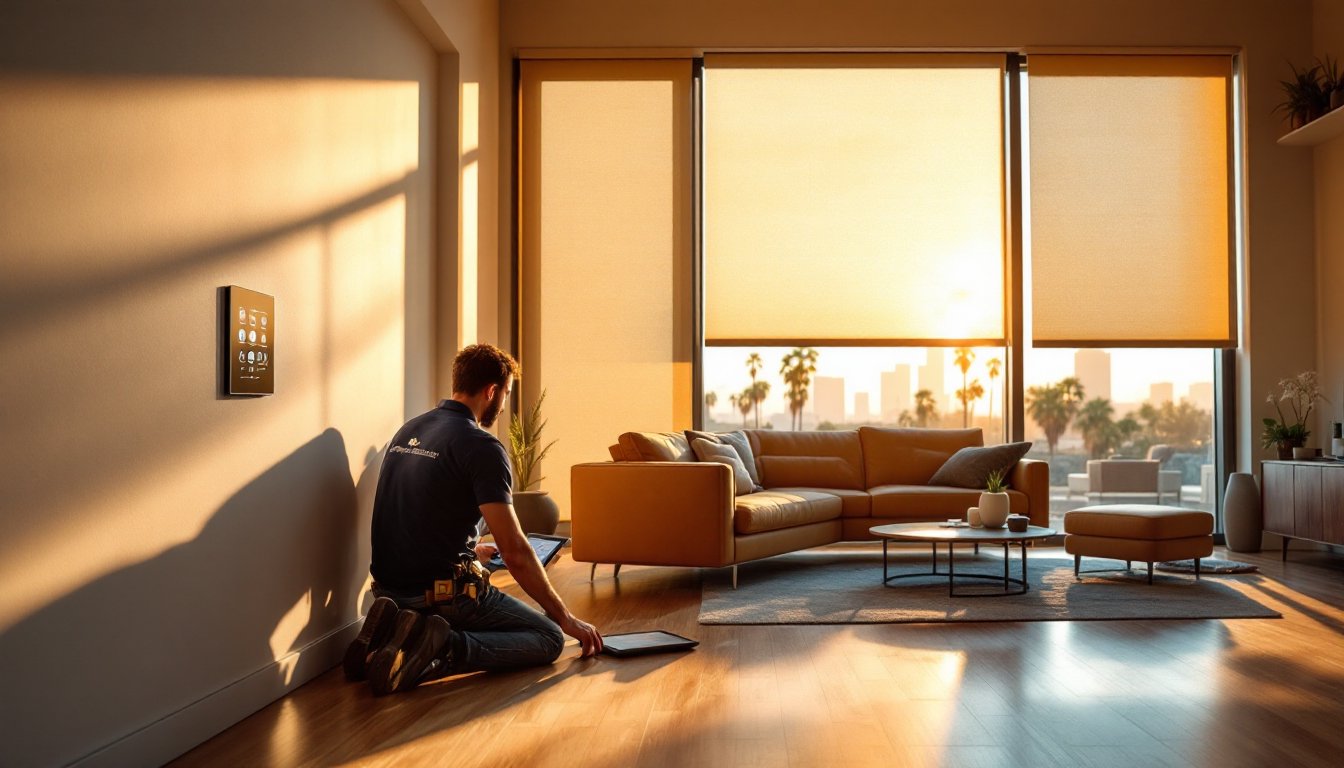
Motorized window shades control heat gain and glare. LA’s sun is no joke, west-facing rooms need serious UV protection. Lutron Serena and Somfy shades integrate with lighting and HVAC systems to reduce cooling loads. Battery-powered models avoid electrical work: hardwired versions require 18/2 low-voltage cable run to each shade. Professional installation runs $400-$800 per shade for motorization, fabric, and integration.
Multi-room audio systems using Sonos or Audio Pro let homeowners stream music throughout the house without installing in-ceiling speakers. Wireless speakers sit on shelves: soundbars handle TV audio. For those pursuing complete smart home integration, systems like Sonos Amp can power existing in-ceiling speakers or new installations, bridging wireless streaming and traditional whole-home audio.
When considering the differences in automation approaches, homeowners often choose voice control platforms, Amazon Alexa, Google Assistant, or Apple HomeKit. The choice depends on existing devices and privacy preferences. Alexa dominates the market with the widest device compatibility: HomeKit offers better privacy and security but supports fewer devices. Most professional installers recommend choosing one primary platform and ensuring all devices support it.
Conclusion
Choosing a home automation company in Los Angeles means balancing budget, technical complexity, and long-term support. Premium integrators deliver seamless whole-home systems but command higher prices. DIY-friendly options and hybrid installers offer flexibility for homeowners comfortable with technology. Either path works, just make sure the installer is licensed, insured, and experienced with the systems they’re selling. LA’s climate, energy programs, and building codes make smart home technology a practical investment, not a luxury.