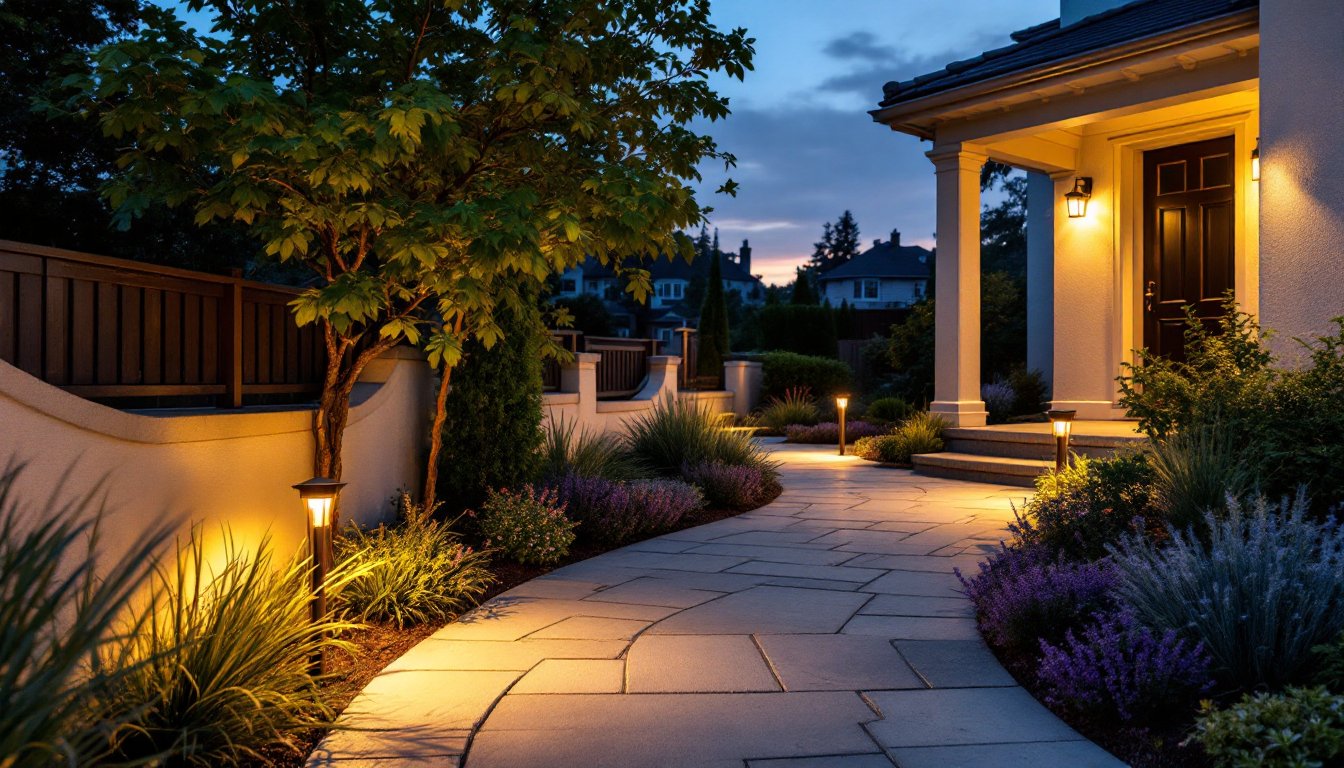
A dark pathway is more than just inconvenient, it’s a liability. Tripping hazards, unwelcome visitors, and a front yard that disappears after sunset all point to the same fix: proper walkway lighting. Whether you’re guiding guests to the front door or adding curb appeal that works around the clock, outdoor path lights deliver safety and style in one package. This guide walks through the types of fixtures worth considering, how to plan a layout that actually works, and the installation steps for a DIY-friendly lighting upgrade that doesn’t require an electrician for every fixture.
Table of Contents
ToggleKey Takeaways
- Outdoor walkway lighting addresses three critical needs—safety by preventing trip hazards, security by deterring trespassers, and curb appeal by extending usability of outdoor spaces after sunset.
- Low-voltage LED fixtures offer consistent brightness and longer lifespan (25,000+ hours) compared to solar options, but require running landscape wire from a transformer to fixtures spaced 6 to 10 feet apart.
- Proper planning includes walking the path at night to identify dark spots, lighting every step and grade change, and avoiding over-lighting to prevent glare that reduces visibility.
- Installation of outdoor walkway lighting is DIY-friendly with low-voltage systems requiring a transformer near a GFCI outlet, a shallow 6-inch trench for wire burial, and quick-connect hubs or wet-rated wire connectors.
- Match your walkway lighting fixtures to your home’s architectural style and layer lighting with uplights and downlights to create depth and visual interest.
- Warm white LEDs (2700K to 3000K) create an inviting atmosphere that complements outdoor spaces better than cooler color temperatures.
Why Outdoor Walkway Lighting Matters for Your Home
Walkway lighting isn’t just decorative, it’s a functional necessity that addresses three core problems: safety, security, and visibility.
Safety first. Uneven pavers, tree roots, and grade changes are easy to miss in the dark. A well-lit path reduces trip-and-fall risks for family members and guests, especially in winter when ice and wet leaves add another layer of hazard. The difference between a twisted ankle and a safe arrival is often just a few lumens at ground level.
Security second. Exterior lighting deters opportunistic trespassers. Motion-activated or dusk-to-dawn fixtures make it clear that a home is occupied and monitored. Dark walkways and entryways signal neglect: lit ones suggest attentiveness.
Curb appeal third. Pathway lights define borders, highlight landscaping, and extend the usability of outdoor spaces after sunset. A properly lit walkway turns a blank yard into an inviting landscape, even from the street. When it comes to outdoor entertaining ideas, lighting extends the hours you can use patios, fire pits, and garden seating.
Types of Outdoor Walkway Lights to Consider
Solar-Powered Path Lights
Solar fixtures are the easiest entry point for DIYers. No wiring, no transformer, no electrician. Each light has a small photovoltaic panel that charges an internal battery during the day and powers an LED after dark.
Pros:
- Zero electrical work required, just stake them into the ground
- No operating cost: sunlight is free
- Relocate anytime without rewiring
Cons:
- Light output depends on sun exposure: shaded yards get dim results
- Battery life degrades after 1–3 years, requiring replacement
- Cheaper models use weak LEDs that barely light the path
Look for solar lights with at least 10 lumens per fixture and replaceable NiMH or lithium-ion batteries. Plastic lenses yellow over time: glass or polycarbonate lenses hold up better. Expect to space solar lights 6 to 8 feet apart for continuous visibility on a standard 3- to 4-foot-wide walkway.
Low-Voltage LED Fixtures
Low-voltage systems run on 12V AC power supplied by a plug-in transformer. They’re brighter, more reliable, and more customizable than solar, with a bit more install effort.
Pros:
- Consistent brightness regardless of weather or season
- Wider range of styles: bollards, well lights, deck lights, recessed paver lights
- Dimmable and timer-compatible with the right transformer
- Long lifespan, quality LED fixtures last 25,000+ hours
Cons:
- Requires running 14- or 16-gauge landscape wire from transformer to fixtures
- Transformer must be installed near a GFCI-protected outdoor outlet
- Voltage drop over long runs: add a second transformer or use thicker wire for runs beyond 100 feet
For a 50-foot walkway, a 150-watt transformer handles 10 to 12 fixtures comfortably. Wire is typically buried 6 inches deep in a trench or run under mulch. No permit is required in most jurisdictions for low-voltage landscape lighting, but always check local codes.
How to Plan Your Walkway Lighting Layout
Good lighting design balances coverage, aesthetics, and power budget. Start by walking the path at night with a flashlight to identify dark spots, obstacles, and decision points, steps, turns, intersections.
Spacing guidelines:
- Standard path lights: 6 to 10 feet apart, depending on fixture brightness and beam spread
- Bright bollards or well lights: 10 to 15 feet apart
- Accent lights for landscaping or architectural features: as needed, not on a fixed interval
Placement priorities:
- Every step or grade change. Light the leading edge so depth perception is clear.
- Turns and intersections. Add a fixture where the path bends or splits.
- Entry and exit points. Brighten the transition from driveway to walkway and walkway to front door.
- Obstacles. Tree roots, raised pavers, decorative boulders, anything that could trip someone.
Avoid over-lighting. More fixtures don’t always mean better visibility. Overlapping beams create glare and wash out contrast, making it harder to see surface texture. Aim for soft pools of light with darker gaps in between, not a floodlit runway.
Sketch a simple site plan on graph paper. Mark fixture locations, measure distances, and total the wattage to size your transformer. For hardscaping and pathway lighting projects, professionals often recommend testing layouts with temporary stakes and battery-powered work lights before committing to a dig.
Step-by-Step Installation Guide for DIY Walkway Lighting
This guide covers low-voltage LED installation, the most common DIY-friendly system. Solar lights skip steps 3–5.
Tools and materials:
- Low-voltage transformer (sized to total fixture wattage + 20% headroom)
- LED path lights (number based on your layout)
- 14- or 16-gauge landscape wire (measure your run and add 10% extra)
- Wire connectors (gel-filled or silicone-sealed, rated for direct burial)
- Flat-blade shovel or trenching spade
- Wire stripper and diagonal cutters
- Voltage tester or multimeter
- Safety glasses and work gloves
Step 1: Install the transformer.
Mount it near a GFCI-protected outdoor outlet, ideally under an eave or in a weatherproof box. Most transformers have a built-in timer or photocell, set it to turn on at dusk and off at dawn or after a set number of hours.
Step 2: Lay out the wire.
Run the landscape wire along the path from transformer to the farthest fixture. Don’t cut it yet, leave it in one continuous piece. Lay fixtures in their planned locations.
Step 3: Dig the trench.
Use a flat shovel to cut a narrow trench 6 inches deep along the wire route. In mulched beds, you can sometimes skip the trench and just tuck the wire under the mulch, but burial is safer from accidental nicks with a weed trimmer.
Step 4: Connect fixtures.
Most low-voltage lights use a quick-connect hub that pierces the main wire without cutting it. Open the connector, insert the wire, and snap it shut, internal teeth make contact. If your fixtures have pigtails, use gel-filled wire nuts rated for wet locations. Strip ½ inch of insulation, twist wires together clockwise, cap with the connector, and wrap with electrical tape.
Step 5: Bury the wire and test.
Backfill the trench, tamp it down, and turn on the transformer. Use a voltage tester at the last fixture, you should read close to 12V. If it’s below 10.8V, you have voltage drop: either shorten the run, upgrade to thicker wire, or add a second transformer.
Step 6: Adjust and aim.
Stake or mount each fixture, then adjust the angle to direct light onto the path, not into eyes. Walk the route after dark to confirm coverage and tweak as needed.
Safety notes:
Always wear safety glasses when driving stakes into hard soil. If you encounter underground utilities, stop and call 811 for a locate before digging deeper. Low-voltage systems are safer than line voltage, but still treat all connections as live when the transformer is plugged in.
Design Tips for Beautiful and Functional Pathway Lighting
Good pathway lighting feels invisible during the day and intuitive at night. Here’s how to nail both.
Match fixture style to architecture.
Craftsman homes pair well with copper or bronze bollards. Modern builds call for sleek, low-profile fixtures in black or stainless steel. Mediterranean or Spanish Revival? Look for wrought-iron or terracotta-inspired designs. Mixing styles works if there’s a unifying finish, all black, all bronze, etc.
Layer your lighting.
Path lights handle the walking surface, but add uplights on trees or shrubs and downlights under eaves or arbors to create depth. Layering makes a yard feel larger and more dynamic. For smart home product reviews on app-controlled landscape lighting, check brands like Philips Hue or Ring for color-changing and scheduling features.
Use warm white LEDs.
Color temperature matters. 2700K to 3000K (warm white) feels inviting and mimics incandescent bulbs. Anything above 4000K (cool white) looks clinical and washes out warm-toned pavers and plantings.
Consider beam angle.
Narrow beams (15–30 degrees) work for accent lighting on focal points. Wide floods (60–120 degrees) are better for path coverage. Most path lights fall somewhere in between.
Mind the glare.
If you can see the LED element from standing height, the fixture is too bright or poorly shielded. Good path lights use frosted lenses, louvers, or downward-facing shields to direct light where it’s needed without blinding passersby.
Test before committing.
Buy one or two fixtures and test them in place for a few nights before ordering the full set. Light looks different on concrete than on flagstone, and what works in a showroom might not suit your yard.
Pathway lighting is one of those rare upgrades that delivers immediate, visible results with relatively low effort. Done right, it’s the kind of project that makes you wonder why you waited so long, and makes your neighbors wonder who you hired.