Recessed lighting, also called can lights or downlights, transforms any room with clean, modern illumination that doesn’t hog ceiling space. Whether homeowners are updating a kitchen, brightening a dim hallway, or finishing a basement, understanding the real costs upfront prevents budget surprises halfway through the project. Prices vary widely depending on fixture type, installation complexity, and whether it’s a DIY job or professional work. This guide breaks down every cost component, from housings and trims to labor and permits, so anyone can plan a recessed lighting project with confidence and avoid overspending on unnecessary extras.
Table of Contents
ToggleKey Takeaways
- Most homeowners spend $300 to $900 for professional installation of four to six recessed lights in a single room, with individual fixtures costing $10 to $60 and electrician labor running $100 to $200 per fixture.
- Recessed lighting cost depends heavily on ceiling access, fixture type (new construction vs. remodel housings), and whether existing circuits can support the load without requiring expensive panel upgrades.
- DIY recessed lighting installation saves $400 to $1,000 in labor costs if you have electrical experience, but most jurisdictions require permits and inspections regardless of who performs the work.
- Remodel housing ($15 to $40) and baffle trim combos offer budget-friendly options, while LED retrofit kits ($10 to $25) and dimmable bulbs ($8 to $15) significantly reduce ongoing energy expenses.
- Running new circuits ($200–$500) or upgrading electrical panels ($1,200–$3,000 for full service upgrades) can double your recessed lighting project cost, making ceiling access and existing wiring assessment critical before budgeting.
- Bundling multiple rooms into one project and purchasing combo kits instead of separate components can save 10 to 30 percent on total recessed lighting installation costs.
Average Cost of Recessed Lighting Installation
Most homeowners spend $300 to $900 to install a set of four to six recessed lights in a single room, including materials and professional labor. Individual fixtures typically run $10 to $60 for basic housings and trims, though premium options with advanced features can push past $100 per unit.
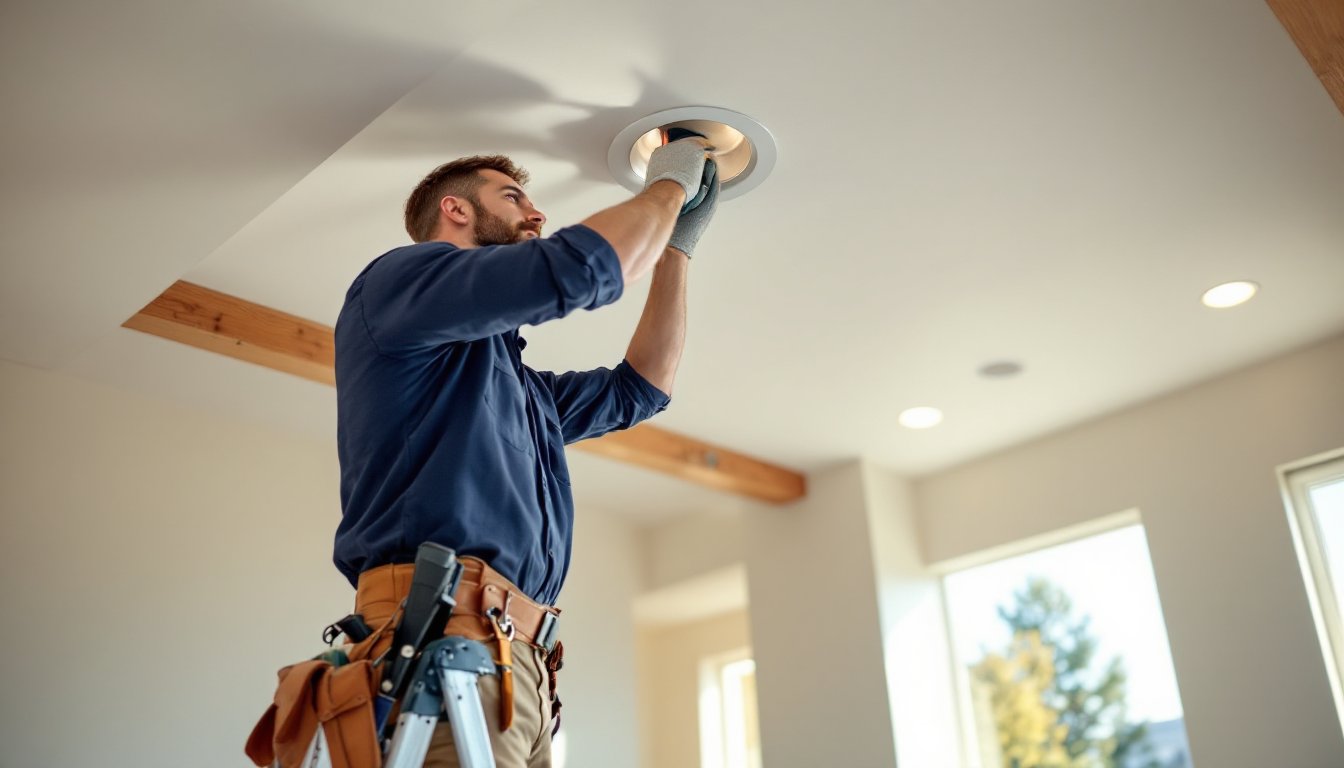
Professional electricians charge $100 to $200 per fixture for installation, covering labor, wiring, and any minor drywall patching. That rate includes cutting ceiling holes, running wire from an existing junction box, securing the housing, and connecting everything to code. According to HomeAdvisor, national averages fluctuate by region, urban markets and areas with strict permitting processes lean toward the higher end.
For a typical six-light layout in a 12×15-foot living room, expect a total project cost of $600 to $1,200 when hiring a licensed electrician. That estimate assumes standard ceiling height, accessible attic space above, and no need for new circuits. Older homes with plaster ceilings, limited access, or outdated wiring can easily double labor hours and costs.
DIY installations slash labor expenses but require confidence with electrical work. Fixtures and materials alone cost $200 to $400 for six lights, assuming the homeowner already owns basic tools and the existing circuit can handle the additional load without requiring a panel upgrade.
Cost Breakdown by Component
Fixture and Trim Costs
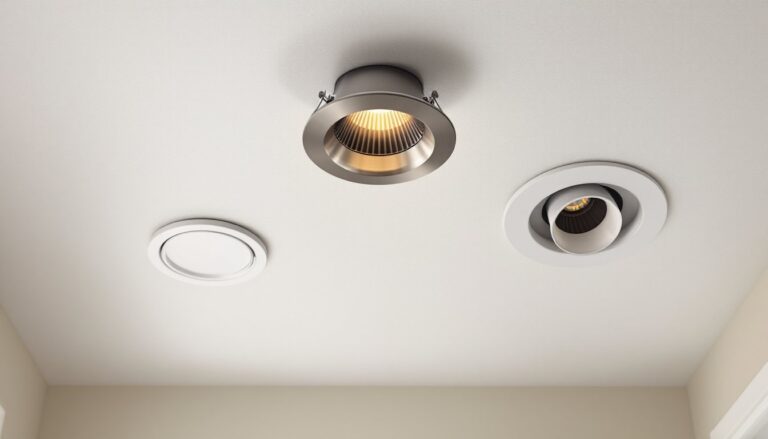
Recessed lighting systems have three main parts: the housing (the metal can that mounts in the ceiling), the trim (the visible ring and interior reflector), and the bulb. Housings run $8 to $40 depending on type. New construction housings ($8 to $20) install from above before drywall goes up, with adjustable bar hangers that span joists. Remodel housings ($15 to $40) clip directly into finished ceilings through a cutout, using spring-loaded clips, no attic access needed.
IC-rated housings (insulation contact) cost $5 to $10 more per unit but let insulation touch the fixture safely, critical in energy-efficient homes. Non-IC cans require a three-inch clearance around the housing, creating thermal gaps that waste heat in winter.
Trims shape the light and aesthetics. Baffle trims ($5 to $15) have ribbed interiors that reduce glare, perfect for living areas. Reflector trims ($8 to $20) maximize brightness with smooth white or specular surfaces, ideal for task lighting in kitchens. Gimbal or eyeball trims ($12 to $30) pivot to aim light at artwork or accent features. Shower trims with sealed glass lenses ($15 to $35) meet wet-location codes for bathrooms.
Bulb and LED Options
Integrated LED retrofit kits ($10 to $25 per light) replace outdated incandescent setups, screwing into existing sockets and trimming out from below, no rewiring. These deliver 10 to 15 watts of power while producing light equivalent to a 65-watt incandescent, and they last 25,000 to 50,000 hours.
Traditional bulb-based systems use BR30 or PAR30 bulbs in standard E26 sockets. LED versions cost $3 to $12 each, while dimmable LEDs run $8 to $15. Dimmable fixtures require compatible LED dimmers ($15 to $40), not standard rotary switches, mismatched dimmers cause flickering and premature bulb failure.
Color temperature matters for ambiance: 2700K to 3000K (warm white) suits living rooms and bedrooms, while 3500K to 4100K (neutral to cool white) works better in kitchens and workshops. CRI (color rendering index) above 90 shows true colors, important for any space where appearance matters.
DIY vs. Professional Installation Costs
Skilled DIYers with electrical experience can install recessed lighting for $200 to $500 in materials alone, saving $400 to $1,000 in labor on a typical six-fixture project. The work involves cutting precise holes with a hole saw (4-inch, 5-inch, or 6-inch depending on fixture size), running 14/2 or 12/2 NM-B cable from an existing circuit, securing housings to joists, and making code-compliant wire connections in junction boxes.
DIY makes sense if the homeowner has experience reading circuit diagrams, owns a voltage tester and basic electrical tools, and the project doesn’t require a new circuit or panel modifications. Most jurisdictions allow homeowners to do their own electrical work but still require permits and inspections, skipping those risks failed inspections during a future home sale.
Hiring a licensed electrician costs $100 to $200 per fixture but includes liability insurance, code compliance, and warranty on labor. Professionals handle permit paperwork, assess whether the existing circuit can support additional fixtures (general lighting circuits max out at 1,440 to 1,920 watts on a 15-amp or 20-amp breaker), and complete drywall patching and painting to match existing finishes.
Projects requiring new circuits or work in finished ceilings with no attic access almost always justify professional help. Running new wire through finished walls and fishing cable horizontally across joists turns a straightforward job into a multi-day frustration. Similarly, homes with aluminum wiring, knob-and-tube systems, or federal panel boxes need a licensed electrician, DIY work on outdated systems creates serious fire hazards and often violates local codes.
Factors That Impact Your Total Cost
Ceiling access drives labor costs more than any other factor. Open attic space above the installation area cuts installation time in half compared to finished ceilings with no access. Electricians charge $50 to $100 extra per fixture when they must fish wire through insulated cavities or cut access holes in adjacent rooms.
Ceiling height above 10 feet requires scaffolding or specialized ladders, adding $100 to $300 in labor for setup and teardown. Vaulted or cathedral ceilings increase complexity further, fixtures need sloped-ceiling housings and longer trims to sit flush.
New circuits cost $200 to $500 when the existing electrical panel has open breaker slots. If the panel is full, a subpanel installation runs $500 to $1,500, and homes with outdated 100-amp service may need a full panel upgrade ($1,200 to $3,000) to support modern lighting loads safely.
Permit fees range from $50 to $200 depending on jurisdiction. Some municipalities require permits only for new circuits, while others mandate them for any alteration to permanent wiring. Failed inspections due to code violations (improper box fill, missing junction box covers, wrong wire gauge) trigger re-inspection fees of $75 to $150.
Fixture count and layout affect material costs and labor efficiency. Installing eight lights in a single room costs less per fixture than scattering eight lights across three rooms, electricians charge trip fees and setup time for each location. According to data from ImproveNet, bulk fixture purchases often unlock contractor discounts of 10 to 20 percent.
Ways to Save Money on Recessed Lighting
Buy remodel kits instead of separate housings and trims. Combo packs bundling a housing, trim, and LED retrofit disc cost $15 to $35 per fixture, often 20 to 30 percent cheaper than purchasing components individually. Home centers run seasonal promotions on multipacks during spring and fall.
Use existing circuits when possible. Adding fixtures to a circuit that already serves the room avoids the $200 to $500 cost of running a new home run to the panel. Calculate total wattage first: six 10-watt LED fixtures (60 watts) barely register on a 15-amp circuit rated for 1,440 watts, leaving plenty of headroom.
Handle prep and finish work yourself. Electricians charge premium rates for cutting drywall, patching holes, and painting. Homeowners who cut their own ceiling holes, touch up paint, and vacuum insulation debris can negotiate 10 to 20 percent off total labor costs.
Choose baffle trims over specialty options. Standard white baffle trims deliver excellent light control for $5 to $10, while decorative trims with satin nickel rings or crystal accents cost $25 to $60 and offer minimal functional benefit. Save the splurge for highly visible fixtures in entryways or dining rooms.
Go with contractor-grade fixtures for utility spaces. Garage, basement, and closet installations don’t need high-CRI premium LEDs, basic remodel cans with integrated 10-watt LED discs perform perfectly well and cost $12 to $18 per fixture.
Bundle multiple rooms into one project. Electricians offer better per-fixture rates when installing a dozen lights in a single visit versus two separate service calls. Combining kitchen and hallway upgrades into one project saves $150 to $400 in trip fees and setup time.