Adding lighting to a deck transforms it from a daytime-only space into an evening retreat that’s safe, functional, and genuinely inviting. Aurora deck lighting, a term referring to low-voltage LED systems designed specifically for outdoor deck installation, has become a go-to choice for homeowners looking to blend energy efficiency with clean aesthetics. Unlike old-school halogen fixtures or clunky solar stakes, modern Aurora-style systems offer reliable illumination, weather-resistant construction, and installation methods that most DIYers can handle in a weekend. Whether someone’s upgrading an existing deck or wiring lights into a new build, understanding the fixture types, layout strategies, and installation basics makes the difference between a polished result and a frustrating do-over.
Table of Contents
ToggleKey Takeaways
- Aurora deck lighting uses low-voltage 12V or 24V LED systems that transform decks into safe, functional evening spaces while reducing energy costs by up to 90% compared to older halogen fixtures.
- Installing aurora deck lighting improves safety by preventing trips and falls on stairs and edges, and can add 1–3% to your home’s resale value when professionally installed.
- Plan your layout carefully by sketching fixture placement, calculating total wattage with a 25% safety margin, and layering different fixture types (post caps, recessed lights, strip lights) to avoid overlighting and glare.
- Aurora deck lighting fixtures come in multiple forms—post caps, recessed stair lights, and rail-mount strips—all using plug-and-play weatherproof connectors that most DIYers can install in a weekend without a licensed electrician.
- Use weatherproof connectors and silicone caulk to seal all penetrations, test fixtures as you install them, and check local codes before starting, as some jurisdictions require permits when transformers are hardwired or decks exceed 30 inches in height.
- Well-designed aurora deck lighting extends outdoor living into evening and winter months, creates visual depth through layered accent lighting, and offers smart home integration for convenient scheduling and dimming control.
What Is Aurora Deck Lighting?
Aurora deck lighting refers to a category of low-voltage LED lighting fixtures engineered for outdoor deck applications. These systems typically operate on 12V or 24V DC power, supplied by a transformer that steps down standard 120V household current. The term “Aurora” isn’t a single brand, it’s become shorthand for sleek, modern deck lighting kits that emphasize durability, energy efficiency, and ease of installation.
Most Aurora-style fixtures use integrated LED modules rated for 25,000–50,000 hours of use, which translates to years of nightly operation without bulb changes. Housings are usually cast aluminum or marine-grade stainless steel with silicone gaskets to achieve IP65 or IP67 ratings, meaning they’re dust-tight and protected against water jets or temporary submersion.
These systems come in several form factors, post caps, recessed stair lights, rail-mount strips, and under-deck downlights. The unifying feature is plug-and-play wiring: fixtures daisy-chain together using weatherproof connectors, eliminating the need for wire nuts or junction boxes in exposed locations. For DIYers, that means fewer points of failure and faster setup compared to line-voltage (120V) landscape lighting, which requires GFCI protection, conduit runs, and often a licensed electrician in many jurisdictions.
Benefits of Installing Aurora Deck Lighting
Safety tops the list. Illuminated stairs, edges, and transitions prevent trips and falls after dark. The National Safety Council reports that poorly lit outdoor spaces contribute to thousands of home injuries annually, and adding even modest lighting to steps and perimeter railings dramatically reduces that risk.
Extended usability is the practical upside. A well-lit deck becomes a four-season outdoor room, ideal for evening dinners, late-night entertaining, or simply letting kids play outside past sunset. Homeowners in northern climates especially appreciate the extra usable hours during short winter days.
Energy efficiency makes Aurora LED systems cheaper to run than older halogen or incandescent setups. A typical 3W LED post cap draws about the same power as a nightlight: running 20 fixtures for five hours a night costs roughly $3–5 per month in most markets. Low-voltage systems also stay cool to the touch, which matters when kids or pets are around.
Aesthetic appeal can’t be ignored. Soft, layered lighting accentuates deck architecture, highlighting railings, emphasizing plantings, and creating visual depth. Many Aurora fixtures offer warm white (2700K–3000K) or tunable color temperatures, letting homeowners match the ambiance to the setting. Some systems even integrate with smart home platforms for scheduling and dimming.
Property value sees a modest bump. According to real estate appraisers, quality outdoor lighting, especially when paired with professional-grade installation, can add 1–3% to a home’s resale value, though that depends heavily on local market conditions and overall landscape quality.
Types of Aurora Deck Lighting Fixtures
Post Cap Lights
Post cap lights sit atop 4×4 or 6×6 deck posts, replacing standard wood or composite caps. They’re the most visible fixture type and often serve as the design anchor for a lighting scheme. Most models feature a die-cast aluminum base with a frosted polycarbonate or glass lens that diffuses LED light in a 360-degree pattern.
Installation involves routing a low-voltage cable up through the post (or along its side if retrofitting), connecting to the fixture’s pigtail lead, and securing the cap with stainless-steel screws or a mounting bracket. For new builds, drilling a ⅝-inch hole up the center of each post before installation makes wire routing trivial. Retrofits require either surface-mount raceways or careful drilling from the deck surface upward, doable with a long auger bit and steady hand.
Post caps typically draw 2–4 watts and emit 30–100 lumens, enough to define perimeter edges without creating glare. Designers often recommend spacing them every 6–8 feet along railings for balanced coverage. When selecting post caps, confirm they’re sized for the actual post dimensions: a nominal 4×4 post measures 3.5×3.5 inches, and caps designed for true 4-inch posts won’t fit without shimming.
Recessed Deck Lights
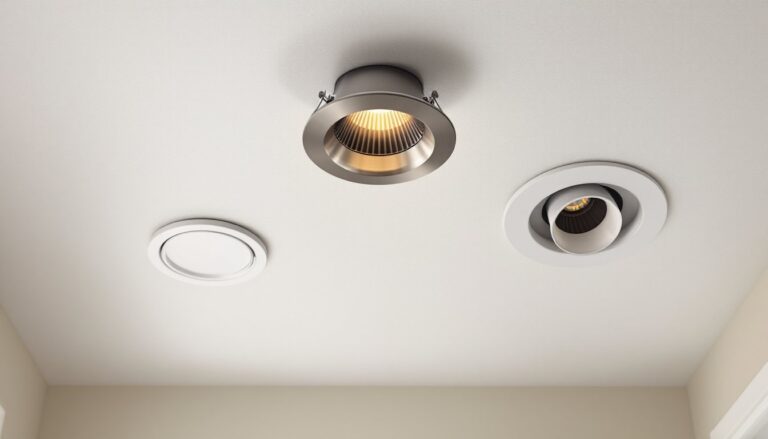
Recessed deck lights, sometimes called step lights or flush-mount fixtures, install directly into stair risers, deck joists, or fascia boards. They create pools of downward or forward light that define walkways and steps without protruding above the surface.
Typical units measure 2–3 inches in diameter and require a hole saw matched to the fixture diameter, usually 2⅛ inches or 2¾ inches. The housing includes a mounting flange and a sealed lens assembly. Wiring feeds through the back, connecting to the low-voltage circuit via snap connectors. Installation depth is usually 1.5–2 inches, so verify that deck framing (nominal 2× lumber is actually 1.5 inches thick) or riser boards provide adequate clearance. If not, consider surface-mount puck lights instead.
Recessed lights shine where accent lighting techniques emphasize transitions. Install them every other stair riser for code-compliant visibility, or space them 24–36 inches apart along deck edges. Because they’re sealed units, they hold up well in wet climates, but always check the IP rating, IP65 minimum for exposed installations. If the deck has composite decking, drill slowly to avoid chipping the cap layer, and apply a dab of silicone around the flange to seal the penetration against moisture infiltration.
How to Plan Your Aurora Deck Lighting Layout
Start by sketching a scaled plan view of the deck, marking posts, stairs, seating areas, and any architectural features worth highlighting. Identify task zones (grilling area, dining table) that need brighter light and ambient zones (perimeter, planters) that benefit from softer accents.
Calculate total wattage to size the transformer. Add up the wattage of every planned fixture, then multiply by 1.25 to account for voltage drop and future expansion. A 150-watt transformer can comfortably handle 30 fixtures at 4 watts each (120W × 1.25 = 150W). Undersizing the transformer leads to dimming and premature failure: oversizing by 20–30% is smart.
Plan wire runs to minimize voltage drop, which becomes noticeable beyond 100 feet on 12V systems. Use 12-gauge low-voltage cable for main runs and 14-gauge for short spurs. The National Electrical Code (NEC) doesn’t require conduit for low-voltage landscape wiring, but burying cable 6–12 inches deep in PVC conduit protects against accidental damage from future deck repairs or landscaping.
Layer the lighting for visual interest. Combine post caps for perimeter definition, recessed step lights for safety, and perhaps under-rail strip lights for ambient glow. Avoid overlighting, a common mistake is flooding every surface, which creates glare and washes out the natural contrast between lit and shadowed areas. Aim for 0.5–1 foot-candle on walking surfaces and 0.1–0.3 foot-candles in ambient zones.
Check local codes for outdoor electrical work. Most jurisdictions allow homeowners to install low-voltage lighting without a permit, but the transformer must be plugged into a GFCI-protected outlet or hardwired by a licensed electrician to a GFCI breaker. If the deck is elevated more than 30 inches or the project involves new electrical circuits, a permit and inspection may be required. When in doubt, call the local building department, it’s a five-minute phone call that prevents costly rework.
Consider browsing project galleries on platforms like Houzz to see how other homeowners have tackled similar deck lighting layouts. Real-world examples often reveal practical details that stock product photos miss.
Installation Tips for Aurora Deck Lighting
Start with the transformer location. Mount it on an exterior wall within 6 feet of a GFCI outlet, out of direct rain and sun. Transformers generate heat, so avoid enclosed spaces without ventilation. If hardwiring, hire a licensed electrician to tie into a dedicated 15A GFCI circuit, this isn’t the place to tap into an existing circuit shared with power tools or holiday lights.
Pre-drill wire routes before running cable. For post caps, drill up through the deck surface into the post using a ⅝-inch auger bit: for recessed lights, drill from the back of the riser or fascia board. Keep holes slightly oversized to ease wire pulling. Fish cable using a flexible drill bit or electrician’s tape to guide it through tight spots.
Use weatherproof connectors rated for direct burial or wet locations. Twist-on wire nuts aren’t acceptable outdoors, moisture will corrode connections within a season. Most Aurora-style kits include silicone-filled snap connectors or heat-shrink solder sleeves: if not, buy Buchanan wire nuts with silicone sealant or marine-grade crimp connectors.
Test as you go. After installing each fixture, plug the transformer in and verify the light works before moving to the next one. Troubleshooting a dead circuit after all fixtures are installed and cables are buried is a nightmare. A simple multimeter set to DC voltage can confirm power at each connection point.
Secure cables to prevent tripping and damage. Use stainless-steel staples or cable clips every 12–18 inches along joist runs. Never staple through the cable jacket, staples should straddle the wire, not puncture it. For exposed runs along railings, consider paintable raceways that blend with the deck finish.
Seal all penetrations. Apply a bead of silicone caulk around recessed fixture flanges, wire entry points in posts, and any holes drilled through composite or wood surfaces. This prevents water infiltration, which leads to wood rot and fixture corrosion. Use clear or color-matched caulk to maintain a clean appearance.
Wear appropriate PPE. Safety glasses are mandatory when drilling overhead or into pressure-treated lumber. A dust mask is smart when working with composite decking, which often contains silica. If routing cables in a crawl space or under-deck area, gloves and knee pads make the job tolerable.
For DIYers looking to expand their skills, step-by-step tutorials on platforms like Instructables cover everything from soldering connections to building custom diffusers. Hands-on project guides often include troubleshooting tips that manufacturers’ manuals skip.
Adjust and fine-tune after dark. Walk the deck at night to check for hot spots (overly bright areas), dead zones (too dim), and glare (fixtures visible from seating areas). Reposition or swap fixtures as needed. Adding a photocell sensor or smart timer automates operation, ensuring lights turn on at dusk without manual intervention.
If the project involves complex runs, multiple zones, or integration with a whole-home automation system, consider hiring a landscape lighting installer for the wiring and leaving the fixture installation to yourself. This hybrid approach cuts labor costs while ensuring code-compliant electrical work, and preserves the DIY satisfaction of the visible, creative parts of the project.