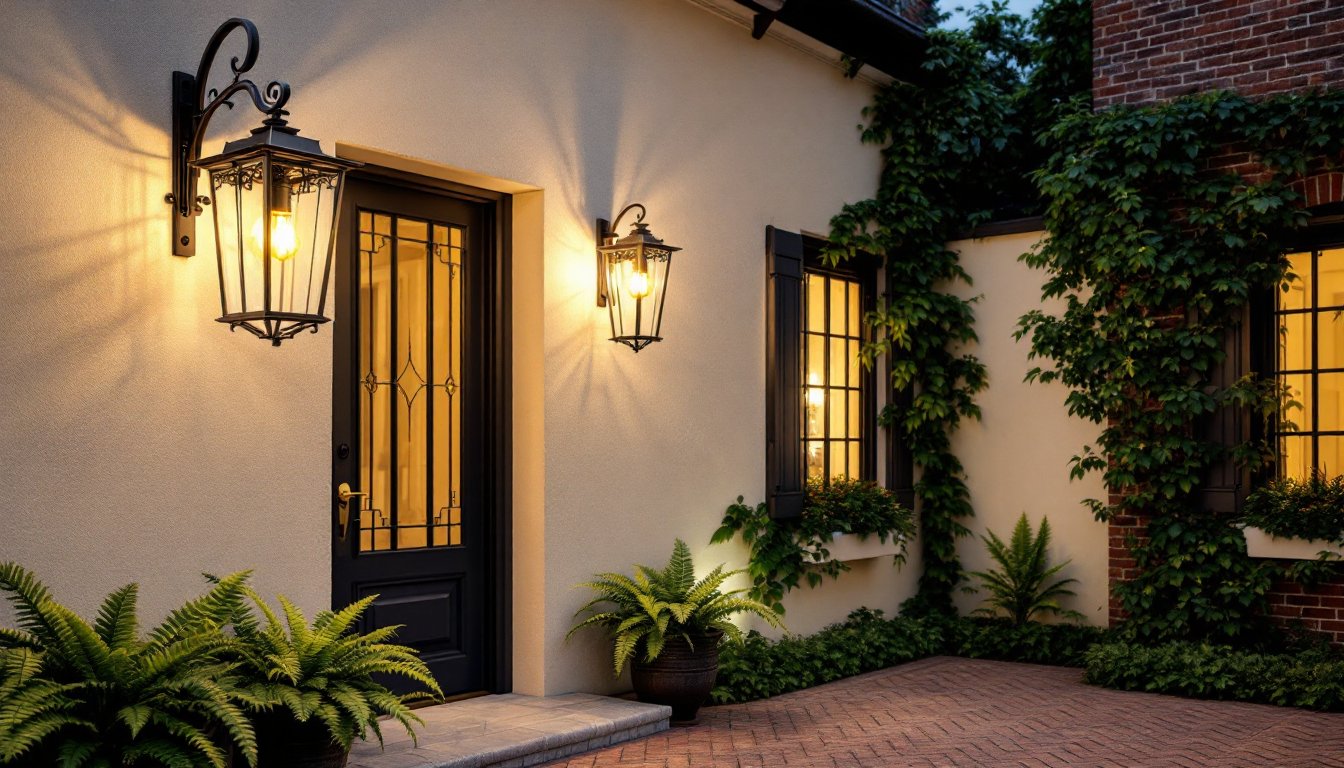
If you’ve ever strolled down Royal Street at dusk, you know the magic of French Quarter lighting, those flickering gas lanterns casting warm pools of light on centuries-old ironwork and stucco. That romantic glow isn’t just for Bourbon Street. With the right fixtures and placement, homeowners can bring that same Old World ambiance to an entryway, courtyard, or front porch. The trick isn’t replicating every architectural detail: it’s capturing the essential feel: cast iron, warm light, and a slightly moody aesthetic that says “timeless” instead of “trendy.”
Table of Contents
ToggleKey Takeaways
- French Quarter outdoor lighting prioritizes warm ambiance over brightness, using fixtures like beveled-glass lanterns and wrought iron sconces that echo 18th and 19th-century colonial design.
- Electric replica gas lanterns offer a DIY-friendly, cost-effective alternative ($600–$1,200 per fixture) to authentic gas lanterns while maintaining the warm, flickering glow essential to the aesthetic.
- Proper placement and mounting height—sconces at 66–72 inches, pendant lanterns 7 feet above porch floors, and post lanterns 20–30 feet apart on driveways—ensures both visual impact and functional illumination.
- Use flame-tip LED bulbs in 2200K–2700K color temperature to replicate the warm, dancing light of gas flames without the cost, permits, or maintenance of true gas fixtures.
- French Quarter outdoor lighting pairs best with brick, stucco, and complementary hardware finishes (matte black, oil-rubbed bronze) while avoiding vinyl siding and over-lighting to preserve the moody, authentic character.
- Authentic installation requires mounting heavy fixtures (10–20 pounds) on metal electrical boxes secured to studs, and running new wiring typically demands a building permit and licensed electrician for panel work.
What Makes French Quarter Outdoor Lighting So Distinctive?
French Quarter lighting draws from 18th and 19th-century colonial Spanish and French design, characterized by open-flame gas lanterns, hand-forged wrought iron, and warm, low-wattage illumination. Unlike modern security floods or bright LED path lights, these fixtures prioritize ambiance over lumens.
The hallmark is the beveled glass panels set into iron frames, often with a patina of age, and the soft, golden light that mimics candlelight or gas flame. Many original fixtures in New Orleans’ French Quarter still run on natural gas, managed by lamplighters who ignite them each evening. For residential use, electric replicas deliver the look without the permitting headaches or ongoing fuel costs.
Another defining trait: proportion and scale. French Quarter lanterns tend to be oversized, sometimes 24 to 30 inches tall, anchoring entryways with visual weight. They’re meant to be noticed, not tucked discreetly into landscaping. The glass is often clear or lightly seeded (not frosted), so the bulb or flame remains visible, creating that signature flicker effect.
Essential Fixtures for Authentic French Quarter Style
Gas Lanterns and Electric Replicas
True gas lanterns require a natural gas or propane line run to each fixture, typically a job for a licensed plumber and, in most jurisdictions, a permit from your local building department. Expect to pay $800–$1,500 per fixture installed, including gas line work. If you’re set on authenticity and already have a gas hookup nearby (outdoor kitchen, pool heater), this route delivers unmatched realism.
Electric replicas offer a more DIY-friendly path. Look for fixtures with flame-tip LED bulbs (2200K–2400K color temperature) that simulate the flicker of gas. Quality replicas use copper or steel frames with a powder-coated or hand-applied patina finish, not lightweight aluminum. Brands like Bevolo and Sheryl’s are known for hand-crafted designs that mirror original French Quarter lanterns, though high-end reproductions run $600–$1,200 per fixture before wiring.
For a budget-conscious option, search for “coach lanterns” or “carriage lights” with clear glass and dark bronze or black finishes. Swap the stock bulb for a 5W flame-tip LED to get closer to that warm, dancing glow.
Wrought Iron Sconces and Wall Mounts
Wall-mounted sconces are the workhorses of French Quarter lighting. They flank doorways, light courtyards, and mark property corners. Authentic versions feature hand-forged scrollwork, hook arms, and oversized back plates (8–12 inches wide) that anchor the fixture to brick or stucco.
When shopping, verify the material: solid iron or steel weighs 8–15 pounds per sconce: thin stamped metal feels flimsy and won’t hold up to weather. Check the mounting bracket, most French Quarter-style sconces require a 4-inch round or octagonal electrical box (standard retrofit boxes work fine if you’re swapping an existing fixture).
Mount sconces at 66–72 inches to the center of the fixture from the finished grade. This height keeps the light at eye level for pedestrians and balances well with typical door heights. For two-story homes, consider a larger lantern (28–36 inches tall) to maintain proportion. Shorter sconces (12–18 inches) work better for secondary areas like side gates or garage entries.
An often overlooked detail: the arm extension. French Quarter sconces project 10–14 inches from the wall, casting light outward rather than directly down. This creates a pool of illumination on walkways and driveways, not just a spotlight on the siding. If your fixture has an adjustable arm, angle it slightly downward (about 15 degrees) to reduce glare.
Choosing the Right Placement for Maximum Impact
Entryway and porch lighting is the obvious starting point. Flank the front door with matching sconces or hang a single oversized lantern from a porch ceiling. If you have a covered entry, a pendant-style lantern (suspended by a chain or rod) delivers more drama than wall mounts. Size it so the bottom of the fixture hangs 7 feet above the porch floor, high enough for clearance, low enough to feel intimate.
For courtyard or patio areas, think in layers. Use wall sconces on the house or perimeter walls for ambient light, then add a ceiling-mounted lantern over a dining table or seating area. Avoid high-wattage bulbs: 40W-equivalent LEDs (around 450 lumens per bulb) provide enough light for conversation and dining without washing out the atmosphere.
Driveway and walkway placement calls for restraint. French Quarter style isn’t about lining a path with identical bollards. Instead, place a single tall post lantern (6–8 feet high) at the driveway entrance or property corner. For longer driveways, space post lanterns 20–30 feet apart, enough to guide without over-lighting.
If you’re lighting a garden or side yard, mount sconces on fence posts or outbuilding walls. This mirrors the way French Quarter courtyards use lighting to define edges and transitions. Aim fixtures to graze vertical surfaces (brick walls, lattice screens) rather than flooding open lawn.
One practical note: keep fixtures at least 8–10 feet from mature trees. Overhanging branches drop sap, leaves, and moisture, which accelerates corrosion and requires constant cleaning.
DIY Installation Tips for French Quarter Lighting
Before you start, turn off power at the breaker and use a non-contact voltage tester to confirm the circuit is dead. French Quarter-style fixtures are heavy, 10 to 20 pounds isn’t unusual, so standard plastic retrofit boxes won’t cut it. Install a metal electrical box rated for the fixture weight, secured to a stud or solid blocking. For brick or stucco, use 1/4-inch lag shields or toggle bolts if there’s no framing behind the mounting location.
If you’re replacing an existing fixture, the wiring is straightforward: black to black (hot), white to white (neutral), and bare copper or green to the ground screw. Use wire nuts rated for outdoor use (typically filled with silicone grease) and wrap connections with electrical tape for added moisture protection.
When mounting to brick or stucco, drill pilot holes with a masonry bit (typically 3/16-inch for #10 screws). Work slowly to avoid cracking, pulse the drill rather than applying constant pressure. If you hit a void (hollow sound), shift the hole location or use a longer anchor.
For flame-tip LED bulbs, choose a wattage that matches the fixture’s socket rating (usually 60W max, though many fixtures look best with 25W-equivalent LEDs). Avoid “daylight” (5000K) or “bright white” (3500K) temperatures: they kill the period aesthetic. Stick with 2200K–2700K for that warm, gas-lamp glow.
If you’re running new wiring (adding a fixture where none existed), this typically requires cutting into drywall or siding to route 14/2 or 12/2 NM-B cable (Romex) from the breaker panel or an existing junction box. Most jurisdictions require a permit for new circuits. If you’re not comfortable with panel work, hire a licensed electrician for the rough-in and finish the fixture install yourself.
Safety gear: Wear safety glasses when drilling overhead or into masonry, and use work gloves when handling raw metal fixtures (sharp edges and burrs are common). If you’re working on a ladder, have a helper steady it, French Quarter lanterns are awkward and top-heavy.
After installation, apply a thin bead of clear silicone caulk around the backplate where it meets the wall. This keeps water from wicking behind the fixture and staining the siding. Check the manufacturer’s instructions: some powder-coated finishes shouldn’t be caulked directly.
Pairing Your Lighting with Complementary Outdoor Decor
French Quarter lighting works best when the surrounding materials echo the same Old World palette. Brick, stucco, and painted wood are natural partners, think deep greens, charcoal grays, or classic black shutters. Avoid vinyl siding in bright whites or beiges: the contrast feels jarring.
For hardware and accents, match the fixture finish. If you’ve chosen matte black lanterns, carry that finish through to door hinges, house numbers, and mailbox mounts. Aged bronze or oil-rubbed bronze pairs well with warmer stucco tones (cream, tan, soft yellow).
Ironwork details, railings, window grilles, or decorative brackets, amplify the French Quarter vibe. Even a simple scroll bracket supporting a house number or planter box reinforces the theme. You don’t need a full balcony: small touches work.
Plant selection matters, too. Ferns, boxwoods, and ivy evoke the lush courtyards of the Vieux Carré. Container plants in cast iron urns or terracotta pots (not plastic) frame entryways without competing for attention. Keep plantings low and controlled near light fixtures, overgrown shrubs block light and trap moisture against the housing.
Many homeowners reference ideas from vintage outdoor lighting projects to layer period-appropriate elements. If you’re adding a ceiling fan to a covered porch, choose one with wooden blades and an oil-rubbed bronze finish rather than brushed nickel or white plastic.
For paving and pathways, brick in a herringbone or running bond pattern nods to French Quarter streets. If brick isn’t in the budget, consider concrete pavers with a tumbled or antiqued finish rather than smooth, modern slabs. The goal is texture and patina, not crisp edges.
Finally, resist the urge to over-light. French Quarter charm relies on pools of light and shadow, not uniform brightness. A single well-placed lantern can define a space better than a dozen recessed cans. Let some corners stay dim, it’s not a security lot, it’s a courtyard. Insights from design-focused sites like Curbed often emphasize restraint and authenticity over covering every square foot in fixtures.